YNW Melly Brings in Lil Durk’s Attorney for the Fight of His Life! Seven Years, No Conviction!

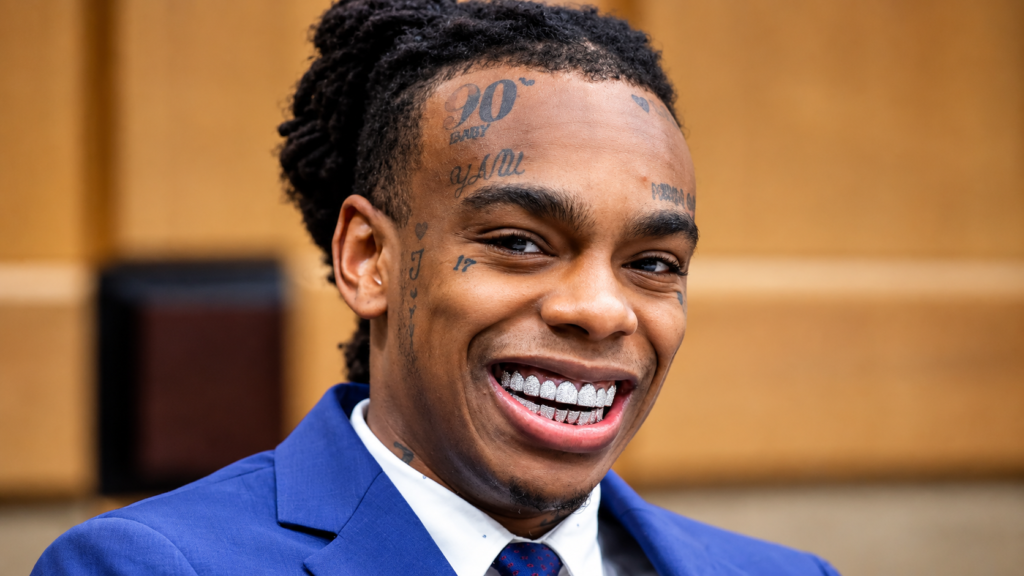
YNW Melly has been sitting in jail since 2019.
Read that again.
Not prison after being convicted.
Jail while waiting for the state to convict him.
And after more than seven years behind bars, one mistrial, multiple delays and another murder trial still ahead of him, Melly has added an attorney coming off a major courtroom victory: Drew Findling, who recently helped secure Lil Durk’s acquittal in his federal murder-for-hire case.
That makes for a big hip-hop headline.
But the attorney change isn’t actually the most interesting part of this story.
The bigger question is how a defendant can spend most of his adult life incarcerated while still legally presumed innocent—and what that says about the difference between pretrial detention and punishment when a criminal case stretches across nearly a decade.
Because whether you believe YNW Melly is innocent or guilty, the state still has to prove it.
And so far, it hasn’t.
Let’s Be Clear About What Melly Is Accused Of
Melly, whose legal name is Jamell Demons, is accused of murdering Anthony Williams, better known as YNW Sakchaser, and Christopher Thomas Jr., known as YNW Juvy, in 2018.
These weren’t strangers.
They were his friends and fellow members of the YNW circle.
Prosecutors allege Melly shot the two men and that the scene was made to resemble a drive-by shooting. Melly has pleaded not guilty. His first murder trial ended in July 2023 when the jury couldn’t reach a unanimous verdict. Prosecutors elected to try him again and continue to seek the death penalty.
So nobody should minimize the seriousness of this case.
Two young men are dead.
Their families have been waiting years for resolution too.
That’s part of this story and shouldn’t disappear simply because Melly is famous.
But there’s another part that deserves just as much attention.
Melly hasn’t been convicted of those murders.
Seven Years Changes the Conversation
This isn’t somebody sitting in jail for six months waiting for trial.
Melly has been incarcerated since February 2019.
We’re talking about more than seven years of pretrial detention.
His retrial is currently scheduled for January 2027.
Think about that timeline.
A person could enter high school, graduate, complete a four-year college degree and still not cover the entire period Melly has spent incarcerated while this case remains unresolved.
That doesn’t determine whether he’s guilty.
It raises a different question:
How long should the government be able to hold somebody before finally obtaining a verdict?
That’s where Drew Findling is now directing attention.
Drew Findling Isn’t Walking Into This Quietly
Findling isn’t treating Melly’s confinement like a minor side issue.
He’s attacking it directly.
Speaking recently about the case, Findling characterized what has happened in Florida as an injustice and focused particularly on the length of Melly’s detention and the conditions under which he has been held.
This isn’t the first time Melly’s attorneys have made that argument.
During an April 2026 bond hearing, his defense proposed an extremely restrictive release arrangement that reportedly included 24-hour security, surveillance, limited movement and no social-media access.
The judge still denied bond.
Melly remains incarcerated awaiting the retrial.
But there’s another side to the conditions argument that needs to be included.
The State and Defense Describe His Confinement Very Differently
Melly’s lawyers have described years of isolation and treatment they consider inhumane.
A Broward Sheriff’s Office detention official presented a substantially different picture during Melly’s bond proceedings.
According to Local 10’s reporting, Major Kevin Corbett testified that Melly had an open dorm to himself, access to a shower, television and basketball court, opportunities for outdoor exercise and access to a psychologist. Prosecutors also presented a letter attributed to Melly in which he described being treated better after being transferred.
That’s important context.
Because when we’re talking about somebody’s incarceration, we shouldn’t turn one side’s allegations into established facts simply because they make a stronger headline.
The defense says the conditions have been extreme.
Authorities have disputed that characterization.
That disagreement is now part of the larger legal battle.
And Then There’s the Lil Durk Connection
This is obviously the part that’s going to get hip-hop’s attention.
Findling recently helped defend Lil Durk in his federal murder-for-hire case, where a jury acquitted Durk of the charges. Now Findling is turning his attention toward Melly.
But we have to be careful about what that means.
Winning Durk’s case doesn’t mean Findling automatically wins Melly’s.
These are different defendants.
Different jurisdictions.
Different evidence.
Different prosecutors.
Different alleged crimes.
Different juries.
There is no championship belt that transfers from one courtroom to another.
What Findling does bring is experience defending extremely high-profile criminal cases involving famous clients—and experience managing the enormous public attention surrounding them.
That matters.
Because Melly’s next trial isn’t simply another celebrity court case.
His life could literally depend on the verdict.
Prosecutors are still seeking the death penalty if he’s convicted.
The Mistrial Matters More Than People Realize
A lot of people hear “mistrial” and interpret it as some version of an acquittal.
It isn’t.
Melly wasn’t found not guilty in 2023.
The jury couldn’t unanimously reach a verdict.
That means prosecutors are allowed to try the case again.
But the mistrial does tell us something important:
the state presented its case once and did not convince that jury unanimously to convict.
Now prosecutors get another opportunity.
And Melly gets another opportunity to defend himself.
That’s the system working through an unresolved case, but the extraordinary length of time involved makes this situation much more complicated than simply saying, “We’ll try again.”
Because while everybody prepares for another trial, the defendant remains incarcerated.
This Is Bigger Than YNW Melly
And this is where I think the story becomes much more interesting than celebrity news.
Forget Melly’s music for a second.
Forget Lil Durk.
Forget Instagram comments.
Ask yourself a basic criminal-justice question:
At what point does extremely long pretrial detention begin to resemble punishment before conviction?
That question doesn’t require believing Melly is innocent.
And questioning the length of his detention doesn’t require pretending the allegations aren’t serious.
Both things can be true at once.
The government can have a legitimate interest in keeping someone detained when a court finds the legal requirements for detention are satisfied.
And society can still question a system where a defendant remains incarcerated for the better part of a decade without a final verdict.
Those aren’t contradictory positions.
That’s exactly the kind of tension our criminal-justice system is supposed to wrestle with.
The Victims Can’t Become Background Characters Either
There’s another danger whenever celebrity criminal cases become entertainment.
The victims disappear.
Anthony Williams and Christopher Thomas Jr. were real people.
Their families have spent years living with this case too.
While the public debates Melly’s confinement, lawyers, evidence and trial strategy, two families are still waiting for a final resolution to the deaths of their loved ones.
Justice delayed affects more than the defendant.
It affects everybody connected to the case.
That’s another reason the timeline matters.
Melly deserves a lawful resolution.
The victims’ families deserve a lawful resolution.
And the public deserves confidence that when the government accuses somebody of the most serious crimes imaginable, the system can eventually deliver an answer.
Now Drew Findling Steps Into One of Hip-Hop’s Biggest Legal Cases
That’s what makes this next trial so important.
Findling isn’t simply trying to add another celebrity acquittal to his résumé.
He’s stepping into a case that’s already lasted years, already produced one mistrial, already generated battles over evidence and confinement, and could ultimately determine whether YNW Melly ever walks out of custody.
The prosecution will once again have to prove its allegations.
The defense will try to create reasonable doubt.
And a jury—not social media, not hip-hop fans, not YouTube commentators—is supposed to determine what the evidence actually proves.
That’s where this belongs.
Because after more than seven years, we’ve heard plenty of opinions about YNW Melly.
What we still don’t have is the one thing that matters most:
a final verdict.
Hip Hop Rotation Reality Check
The most important question here isn’t whether you like YNW Melly.
It isn’t whether you think his music is good.
And it isn’t whether Drew Findling just helped Lil Durk win another case.
It’s whether we’re comfortable with a criminal-justice process where someone can spend more than seven years incarcerated without being convicted while the government prepares to try the case again.
You can believe the allegations against Melly are extremely serious and still ask that question.
In fact, serious cases are exactly where the system has to prove that its principles mean something.
Presumption of innocence doesn’t mean the accused is innocent.
It means the government still has to prove that he isn’t.
And until a jury does that, YNW Melly remains an accused man—not a convicted one.
Hip Hop Rotation Question
Should there be stronger limits on how long someone can remain jailed before trial when the first prosecution ends without a conviction—or do the seriousness of the charges sometimes justify years of pretrial detention?