
50 Cent Figured Out the Real Game: Hip-Hop Runs on Attention

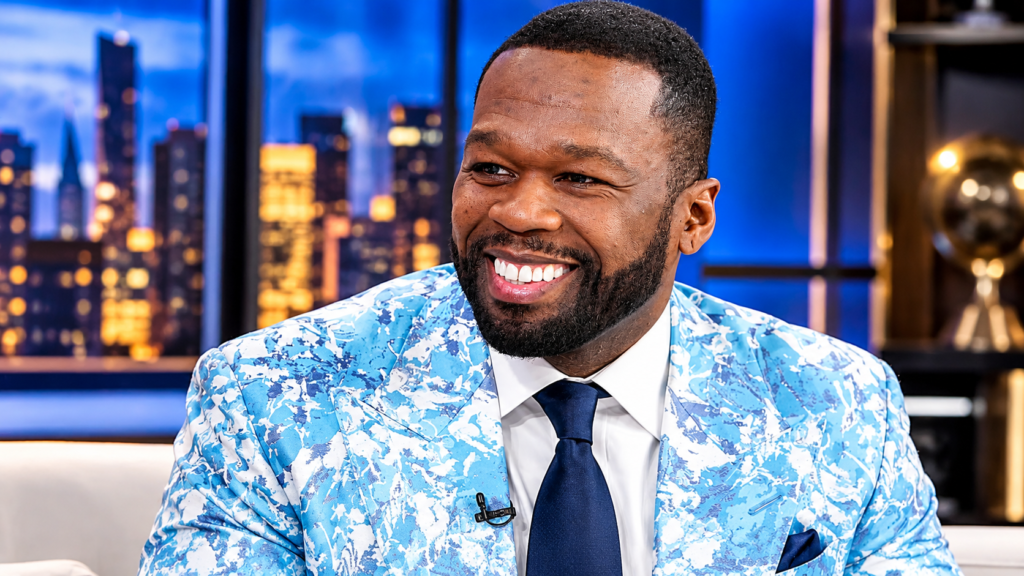
50 Cent doesn’t need a new album to dominate a day in hip-hop.
That’s probably the clearest evidence of how powerful Curtis Jackson has become.
A rapper gets arrested. An old rival makes the news. A celebrity relationship falls apart. Somebody files a lawsuit. A television executive makes a questionable decision. Sometimes 50 doesn’t even need to be connected to the story.
He posts a picture.
Writes two sentences.
And waits.
Within hours, blogs are reporting the post. Podcasts are debating it. YouTube channels are reacting to it. The person he mentioned may respond. Then 50 responds to the response, and suddenly something that had absolutely nothing to do with him has become another chapter in the 50 Cent media universe.
You can call that trolling.
Sometimes it absolutely is.
But dismissing 50 as simply a troll misses the much larger story.
50 Cent figured out that the most valuable currency in modern hip-hop isn’t music. It’s attention—and he learned how to control attention before social media gave everybody else the same tools.
That’s why he’s still culturally dangerous more than two decades after becoming a superstar.
50 Was Building an Algorithm Before We Had Algorithms
Go back to the beginning.
Before Get Rich or Die Tryin’, 50 understood frequency.
He understood that disappearing was dangerous.
So he flooded the streets.
Mixtapes.
Freestyles.
Remixes.
Diss records.
G-Unit.
If somebody else had a hot record, 50 and G-Unit might rap over the instrumental and create their own version.
Think about what they were actually doing.
They were hijacking existing attention.
A beat was already popular.
People already recognized it.
50 inserted himself into that conversation.
Today we’d call that a content strategy.
Back then it was mixtape culture.
And it helped create one of the most anticipated major-label debuts hip-hop had seen.
By the time Get Rich or Die Tryin’ arrived in 2003, 50 wasn’t being introduced.
The audience had already been following the story.
And the Story Was Always Bigger Than the Music
That’s the part people forget when discussing 50’s rise.
The music was obviously important.
But 50 Cent wasn’t simply selling records.
He was selling a character.
The shooting.
The survival story.
Queens.
G-Unit.
The bulletproof vest.
The conflicts.
The humor.
The disrespect.
The sense that this guy might say absolutely anything.
You weren’t simply waiting for another single.
You were waiting to see what 50 was going to do next.
That’s a completely different kind of relationship with an audience.
And once you understand that, his entire career after music starts making more sense.
Beef Became Programming
Hip-hop beef existed long before 50 Cent.
He didn’t invent it.
But he understood how to serialize it.
Ja Rule wasn’t simply one diss record.
Neither were his conflicts with The Game, Fat Joe, Jadakiss, Cam’ron or Rick Ross.
There could be records.
Interviews.
Parodies.
Mixtapes.
Videos.
Public comments.
Years later, somebody’s name comes up and suddenly the story starts again.
That’s where 50’s instincts were different.
Most people treat conflict like an event.
50 treats conflict like a television series.
There’s always another episode available.
And that creates tension around him even when he’s not releasing music.
You might disagree with the tactic.
You might think some of it goes too far.
But culturally, it works for a simple reason:
people want to know what happens next.
Then Social Media Gave Him the Perfect Weapon
Instagram didn’t create 50 Cent’s personality.
It gave that personality the perfect distribution system.
Suddenly he didn’t need a radio interview.
He didn’t need MTV.
He didn’t need a magazine.
He didn’t even need a song.
He could publish directly to millions of people.
And 50 adapted almost perfectly.
Picture.
Caption.
Punchline.
Post.
That’s it.
No corporate language.
No carefully sanitized celebrity statement.
No six-paragraph explanation.
Just enough information to make people laugh, get angry or start talking.
Then everybody else distributes it for him.
That’s the genius of it.
50 creates the spark. Hip-hop media provides the gasoline.
That’s Also Where Things Get Uncomfortable
Because attention isn’t neutral.
When 50 jokes about somebody with a fraction of his platform, millions of people can suddenly be looking at that person.
When he amplifies an allegation, people may assume there’s truth behind it simply because 50 posted it.
When he revives an old conflict, the people involved may find themselves answering questions about something they thought ended 15 years ago.
That’s real power.
And power creates responsibility whether the person exercising it wants that responsibility or not.
This is where the argument around 50 gets complicated.
The same instincts that make him culturally magnetic can also make him reckless.
His willingness to say what everybody else is afraid to say is part of the attraction.
It’s also exactly what can make the consequences bigger.
That’s the tension at the center of 50 Cent.
The thing that makes him entertaining is sometimes the same thing that makes him dangerous.
But Calling Him a Troll Ignores the Empire
If Instagram were the entire story, eventually the act would probably become exhausting.
But while everybody is watching the jokes, 50 has spent years building something much more substantial.
Television changed the way his post-rap career should be understood.
Power wasn’t simply a rapper attaching his name to a television show.
The series became a franchise.
Then came additional television projects, including BMF, alongside 50’s broader production ambitions.
That’s where his career took another turn.
Because now he wasn’t simply trying to remain famous.
He was helping create the infrastructure through which other people could become famous.
Actors.
Writers.
Directors.
Producers.
New characters.
New stories.
New audiences.
That’s a different level of cultural influence.
The Rapper Became the Network
This is where I think 50’s evolution becomes especially important to hip-hop.
The traditional rapper spends years trying to get onto somebody else’s platform.
Radio.
Television.
Movies.
Magazines.
Record labels.
50 eventually started thinking:
Why don’t I become the platform?
That’s a completely different mentality.
When you own or produce the show, you aren’t waiting for somebody to invite you into the culture.
You’re creating the room everybody else wants to enter.
That’s where hip-hop entrepreneurship becomes something bigger than selling liquor, sneakers or merchandise.
You’re building media infrastructure.
And media infrastructure controls stories.
That’s Why Power Matters Beyond Ratings
Think about how many conversations came out of the Power universe.
Characters became celebrities.
Scenes became memes.
Songs received placements.
Actors gained larger audiences.
Episodes became Monday-morning conversations.
The show existed inside television, but culturally it operated in many ways like hip-hop.
People argued about characters the way they argued about rappers.
They debated betrayals.
Relationships.
Deaths.
Loyalty.
Street codes.
Power.
That’s cultural territory 50 understood extremely well.
He didn’t leave hip-hop when he entered television.
He brought hip-hop’s storytelling instincts with him.
And Then Something Else Happened
50 became useful to hip-hop even when he wasn’t making music.
That’s one of the hardest transitions for a rapper to make.
Hip-hop can be brutal with aging artists.
A rapper dominates for five years.
Maybe ten.
Then the sound changes.
The audience changes.
A younger generation arrives.
Suddenly the legend is spending every interview explaining how much better everything was when they were popular.
50 avoided that trap.
He can talk about 2003.
But he can also make himself relevant to something that happened this morning.
That’s the difference between nostalgia and relevance.
Nostalgia says:
Remember when I mattered?
Relevance says:
I’m still part of what you’re talking about.
Younger Artists Still Respond to Him
That’s another measurement of influence.
Respect isn’t the same thing as relevance.
Hip-hop has plenty of legends everyone respects.
But if they criticize a young rapper tomorrow, that rapper might not even respond.
50 says something?
There’s a decent chance somebody answers.
Not because 50 controls their career.
Because they understand what his platform can do.
One post can put somebody’s name in front of millions of people.
That attention can be helpful.
Or extremely uncomfortable.
Either way, it’s difficult to ignore.
He Also Understands the Difference Between Fame and Ownership
A lot of artists spend their entire careers chasing visibility.
50 increasingly seems interested in what sits behind visibility.
Ownership.
Production.
Intellectual property.
Distribution.
Business relationships.
Franchises.
That’s where longevity comes from.
A rapper can have a hit.
A businessman wants to own something that can generate hits repeatedly.
That’s a different mindset.
And it’s one of the biggest lessons younger artists can take from 50’s career.
Don’t only ask:
How do I become famous?
Ask:
What am I building while people are paying attention?
Because attention eventually moves somewhere else.
Ownership can remain.
50 Understands Something About Hip-Hop That People Don’t Like Admitting
Hip-hop likes to talk about authenticity.
But hip-hop is also entertainment.
Personality matters.
Conflict matters.
Humor matters.
Storytelling matters.
Characters matter.
50 understands all of that.
That’s why he can move between music, television, business and social media without seeming like four completely different people.
The underlying product is always the same:
Curtis Jackson understands how to create a story people want to follow.
Sometimes the story is himself.
Sometimes it’s an enemy.
Sometimes it’s a television character.
Sometimes it’s somebody else’s scandal.
But he understands narrative.
That’s why his influence travels.
The Question Is Whether Anyone Should Have That Much Power Over the Conversation
This is where the story gets more complicated.
Because once one person’s reaction can become bigger than the original event, you have to ask what that means for hip-hop media.
Are we reporting the story?
Or are we reporting 50’s reaction to the story?
Sometimes the answer is both.
That’s how much gravitational pull he has developed.
Something happens.
Then people wait for 50.
That’s funny until you think about it.
A rapper who debuted nationally more than two decades ago has essentially become one of hip-hop’s unofficial commentators, provocateurs and media distributors.
Nobody elected him.
There isn’t a job title.
He simply built enough attention that the role appeared around him.
And Maybe That’s His Greatest Reinvention
50 Cent entered hip-hop trying to force people to listen.
Now he barely needs music to make people listen.
That’s an extraordinary transformation.
He went from rapper to superstar.
Superstar to businessman.
Businessman to television producer.
Television producer to media personality.
And somewhere along the way, those identities stopped being separate.
They became one machine.
The songs created the audience.
The personality kept the audience interested.
The controversies kept him in the conversation.
The businesses turned attention into assets.
The television projects expanded the audience.
Social media connected everything together.
That’s not accidental longevity.
That’s architecture.
The Real 50 Cent Legacy May Be Bigger Than Rap
Years from now, people will still debate where 50 belongs among the great rappers.
They’ll talk about Get Rich or Die Tryin’.
They’ll talk about G-Unit.
They’ll talk about the mixtapes.
They’ll definitely talk about the beefs.
But that may not be the most interesting part of his legacy.
The bigger story might be that 50 Cent became an early blueprint for the post-rapper hip-hop mogul in the social-media era—someone who understood that the microphone could eventually become a television studio, a production company, a social-media platform and an entire entertainment ecosystem.
And that’s why reducing him to trolling misses what actually happened.
The trolling gets the headline.
The businesses create the longevity.
The television shows expand the influence.
And the personality connects all of it.
Most artists spend their careers hoping the culture doesn’t move on without them.
50 figured out something else.
If you can control enough stories, build enough platforms and command enough attention, you don’t have to chase the culture every time it moves.
Sometimes you can make the culture move toward you.
And more than twenty years after hip-hop first met Curtis Jackson, people are still turning their heads whenever he decides there’s something worth talking about.
That’s not just relevance.
That’s cultural power.