Police Investigate Killing After BloodHound Q50’s Funeral — But a Sticker Is Not a Motive

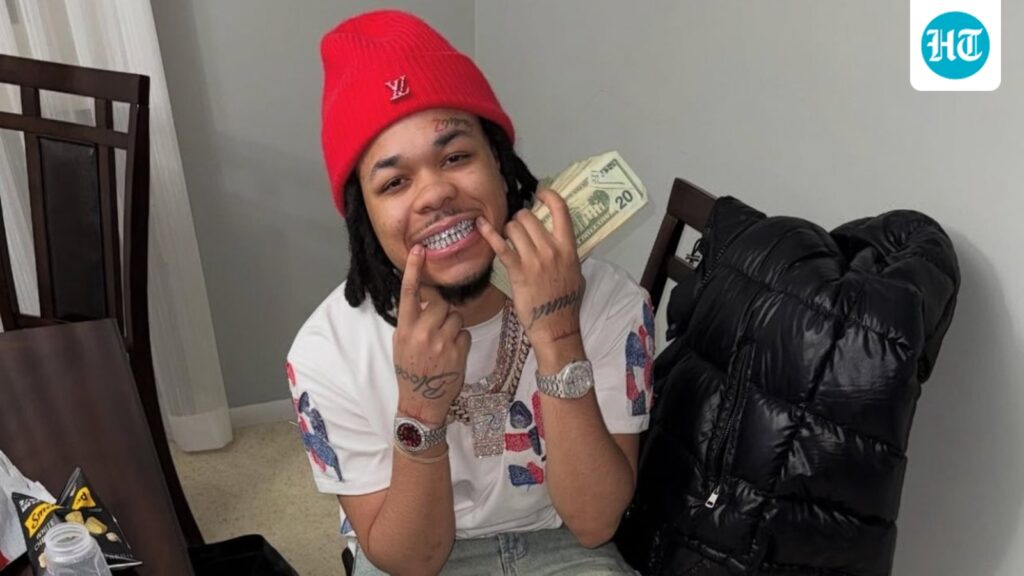
Chicago police have released surveillance footage from the fatal shooting of Naseem D. Stevens.
The video gives investigators a sequence of events. It does not give the public a motive.
That difference matters because Stevens was killed on September 25, the same day BloodHound Q50’s funeral was held in Merrillville, Indiana. A police report obtained by the Chicago Tribune and Chicago Sun-Times noted that Stevens’ vehicle displayed a funeral sticker.
Detectives are examining a possible connection.
They have not confirmed one.
According to Chicago police information reported by CBS Chicago, Stevens was 26 when he was attacked at a gas station in the 7500 block of South Cottage Grove Avenue in the city’s Greater Grand Crossing neighborhood.
Police surveillance footage shows a black sedan entering the lot at approximately 7 p.m. Two masked individuals then approached Stevens’ vehicle and opened fire, according to police and CBS Chicago.
CBS Chicago reported that one assailant carried a handgun while the other carried a rifle. Police said Stevens attempted to drive away as the attack continued.
The Chicago Sun-Times reported that the gunmen returned to the black sedan, pursued Stevens’ vehicle and continued firing. Stevens later crashed near the 7400 block of South Cottage Grove Avenue and was pronounced dead at the University of Chicago Medical Center, according to police information cited by CBS Chicago.
The Sun-Times reported that a female passenger escaped after the crash and was not shot.
Police are now asking the public to help identify the two gunmen and the black sedan. The investigation is listed under case number JK427296, and anyone with information can contact Area 2 detectives at 312-747-8271.
Those are the established facts.
The funeral theory remains a lead.
According to police records reviewed by the Tribune and Sun-Times, BloodHound Q50’s funeral took place earlier that day in Merrillville. The sticker visible on Stevens’ vehicle gave detectives a reason to examine whether there was some connection between the service and the shooting.
But the same police reporting describes that link as uncertain.
Investigators have not publicly established that Stevens attended the funeral. They have not explained what the sticker represented, who placed it on the vehicle or whether the attackers encountered Stevens independently.
They also have not announced evidence showing that Stevens was followed from the service.
Stevens’ mother, Karonna Williams, told the Chicago Tribune that she did not know whether her son attended the funeral. She also disputed attempts to reduce him to claims circulating online.
That deserves attention because social media rarely waits for an investigation to finish.
Once a rapper’s name, a funeral and a deadly shooting appear in the same story, people begin filling the gaps. Street affiliations get assigned. Retaliation becomes the assumed motive. An investigative possibility gets repeated until it sounds like a police conclusion.
Repetition does not turn an unconfirmed theory into evidence.
Chicago police have not publicly announced a motive in Stevens’ killing. Claims connecting him to a gang or describing the attack as retaliation remain unconfirmed.
BloodHound Q50, born Mikquale Cooper, was 22 when he was fatally shot at a Fuller Park gas station on September 13, according to Chicago police reporting and the Cook County Medical Examiner’s identification cited by ABC7 Chicago.
A police report reviewed by the Chicago Sun-Times said six assailants attacked Cooper after arriving in two vehicles. But no publicly confirmed evidence establishes that Cooper’s killing and Stevens’ killing were carried out by the same people.
Two cases occurring close together can justify comparison.
They do not prove coordination.
That is the larger problem with attaching BloodHound Q50’s name too tightly to Stevens’ death before detectives complete their work. The hip-hop connection makes the story more clickable, but it also risks building a finished street narrative out of one suggestive detail.
That can affect Stevens’ reputation before police determine why he was targeted. It can reshape how the public discusses Q50’s death without evidence connecting the investigations. It can also place additional pressure on two grieving families whose losses are already being turned into online theories.
The surveillance footage may help identify the attackers or their vehicle. It may eventually support or eliminate the funeral theory. Other evidence—such as ballistic, vehicle or digital records—could answer questions that the footage cannot.
For now, those answers have not been made public.
Police have not announced whether either gunman has been identified. They have not confirmed where the black sedan traveled before or after the attack. They have not said whether Stevens was specifically targeted because of the funeral, for another reason or through circumstances not yet disclosed.
Both killings remain unresolved based on the available reporting.
A funeral sticker is evidence of a possible association. It is not evidence of a motive.
REALITY CHECK: A Lead Is Not a Conclusion
People connect incomplete details every day.
A sticker, photograph, shared location or social-media association can raise a legitimate question. The problem begins when that question gets repeated as an answer.
That does not mean reporters should ignore possible connections disclosed in police records. It means every report should preserve the uncertainty surrounding those connections instead of allowing the most dramatic theory to take over.
The same principle applies outside a homicide investigation.
Your name can become attached to a rumor because you attended an event, appeared in a photo or knew somebody involved. Once the story spreads, a later correction may never reach everyone who saw the original claim.
That is why precision matters early.
Stevens deserves to be identified as the victim of an unresolved killing, not reduced to unconfirmed claims about who he was or why he died. Q50’s name should not become automatic proof that two acts of violence share the same motive.
One fact can justify another question. It cannot answer every question by itself.
LET’S TALK ABOUT IT
When police disclose a possible connection that remains unconfirmed, how should news outlets report it without turning an investigative lead into a public verdict?
Does attaching a rapper’s name help an unresolved case receive necessary attention—or make unsupported street narratives harder to correct?
Drop your perspective below—because careful reporting matters most when the full story is still unknown.