Nas and Mayor Zohran Mamdani Look to Keep New York at the Center of Hip-Hop’s Future

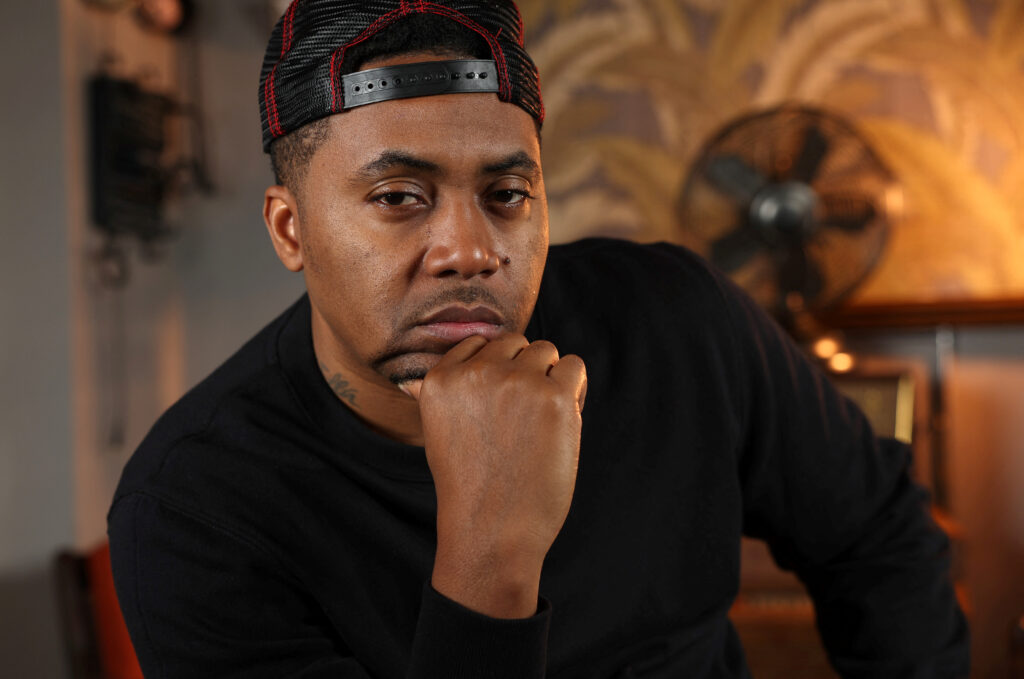
New York’s place in hip-hop history is firmly established, but Nas and Mayor Zohran Mamdani are looking beyond the city’s past as they consider what will be required to maintain its cultural influence for another generation.
Nas joined Mamdani for a short documentary filmed near the Queensbridge Houses, where the two discussed New York’s relationship with hip-hop, the importance of preserving opportunities for working artists and the recently opened Bronx School of Hip-Hop. Their discussion centered less on celebrating the city’s status as the birthplace of hip-hop and more on ensuring that New York remains a viable home for the people creating its future.
For Nas, the subject carries an obvious personal connection. The Queensbridge native built much of his early artistic identity around documenting the neighborhood where he grew up, most famously on his 1994 debut album, Illmatic. His music became part of a larger tradition in which New York rappers used their neighborhoods not merely as backdrops, but as essential parts of their storytelling.
Mamdani approached the issue from the perspective of city government, arguing that New York cannot rely solely on its historical connection to hip-hop if artists are increasingly unable to afford to live and work there. His comments reflect his broader political emphasis on affordability, although the documentary frames the issue specifically around the city’s creative communities.
The discussion raises a question that extends beyond any particular administration or policy proposal: Can a city maintain its reputation as a cultural capital if emerging artists increasingly struggle to remain there long enough to develop?
New York’s Influence Has Changed Along With Hip-Hop
During hip-hop’s formative years, New York was not simply one important market among many. The city was the culture’s primary center, with individual boroughs and neighborhoods developing distinct identities that influenced everything from production and lyricism to fashion and slang.
That dominance gradually changed as hip-hop expanded nationally and internationally. Los Angeles established a powerful West Coast tradition, while cities including Atlanta, Houston, New Orleans, Memphis and Detroit developed movements that reshaped the sound of rap. The expansion did not diminish New York’s historical importance, but it did eliminate the assumption that the genre’s future would always be determined there.
That distinction is important when evaluating contemporary discussions about whether New York remains the “capital” of hip-hop. Historical significance and current cultural dominance are not necessarily the same measurement. New York possesses an unmatched legacy, but maintaining a vibrant contemporary scene requires more than relying on artists and movements that emerged decades ago.
Nas’ participation in the documentary reflects that distinction. Rather than presenting New York’s past accomplishments as sufficient evidence of its current position, he focuses on creating opportunities for the next generation.
The Bronx School of Hip-Hop Represents a New Approach
The Bronx School of Hip-Hop is one of the clearest examples of how New York is attempting to connect the culture’s history with education and future career opportunities.
The public high school opened in September with approximately 100 freshmen and incorporates hip-hop’s five elements into a curriculum that also includes traditional academic subjects. The school uses MCing, DJing, graffiti, breaking and knowledge of self as pathways into areas including communication, technology, design, health and critical thinking.
The concept represents a significant shift in the institutional treatment of hip-hop. During the culture’s early decades, rap and its surrounding elements were frequently dismissed as distractions or temporary trends. More than 50 years later, New York City is incorporating those same cultural forms into a public-school environment.
Nas has connected the school’s mission with his own experiences growing up in Queensbridge. He has spoken about seeing talented people in his neighborhood whose potential was never fully developed because they lacked exposure to different opportunities.
The significance of the school, therefore, is not dependent on producing future rappers. Hip-hop supports an extensive professional ecosystem that includes producers, audio engineers, designers, filmmakers, managers, attorneys, journalists, marketers and entrepreneurs. A student interested in music production, visual design or video creation may be developing skills applicable to industries well beyond performing.
Whether the school’s approach ultimately produces stronger educational outcomes will require time to determine. Its significance today is that a culture once largely developed outside traditional institutions is now being used as an educational framework inside one.
Affordability Has Become Part of the Cultural Discussion
Mamdani’s comments also place housing and affordability inside the broader conversation about New York’s creative future. His position is that artists must be able to afford to remain in the city if New York expects to continue benefiting from the culture they produce.
That argument intersects with a longstanding challenge facing major cultural centers. Artists and other creative communities can help make neighborhoods attractive, only to see increased investment and housing costs eventually make those same neighborhoods difficult for emerging creators to afford.
The cultural consequences can be difficult to measure because the artists most affected are often people whose careers have not yet developed. Established performers can generally afford to live where they choose. The larger concern involves musicians, writers, filmmakers and designers who may need years to develop their work before it generates sustainable income.
Political disagreements remain over which housing and economic policies best address affordability in New York. The underlying cultural issue, however, is broader than any single policy proposal. Creative communities require environments in which emerging artists have enough time and access to develop their work.
If those environments disappear, a city can retain its cultural history while gradually losing some of the conditions that created it.
Preserving Hip-Hop Requires More Than Preserving Its Past
New York has increasingly recognized hip-hop as an important part of its cultural heritage. Historic locations have been commemorated, institutions have documented the culture’s development and artists who were once considered outsiders have become celebrated figures in American entertainment.
Preservation is important, but it serves a different purpose from creation.
A city can successfully document where important records were made, where influential artists lived and where major cultural movements developed without necessarily creating the conditions required for another movement to emerge.
That appears to be the larger issue underlying the conversation between Nas and Mamdani. New York’s status as hip-hop’s birthplace cannot be challenged, but its future relevance will depend on artists who may currently be unknown.
Those artists do not need to recreate the sound of previous generations to validate New York’s history. In fact, the strongest evidence of a living culture would be young artists developing something distinctive enough to eventually become another chapter of that history.
REAL TALK
There is a difference between honoring a legacy and depending on one.
New York has every reason to celebrate what it contributed to hip-hop, and the importance of those contributions does not diminish because other cities later became influential. The more difficult task is ensuring that historical success does not become a substitute for continued development.
The same principle applies well beyond music. Organizations, businesses and individuals can become so closely identified with past accomplishments that maintaining the reputation becomes easier than continuing the behavior that originally created it. Eventually, the story of what was accomplished becomes stronger than the evidence of what is currently being built.
New York’s relationship with hip-hop presents a particularly interesting version of that challenge because the culture itself was created through experimentation. The artists who established it were not attempting to preserve an existing tradition. They were creating something new from the resources and environments available to them.
Preserving that spirit may therefore require more than protecting landmarks or teaching history. It requires leaving enough economic and creative space for young people to experiment without knowing whether what they are building will become important.
The next transformative movement in New York may not resemble the hip-hop that came before it. That would not necessarily represent a rejection of the city’s legacy. It could be the clearest continuation of it.
LET’S TALK ABOUT IT
Should New York’s status as the birthplace of hip-hop be enough for it to remain the culture’s capital, or should that title depend on what the city continues to produce today?
And as major cities become increasingly expensive, can they remain genuine creative centers if emerging artists have difficulty affording the years it often takes to develop their work?