Yelawolf and Skynny Rogers Face a Copying Debate — But There’s Still No Proof

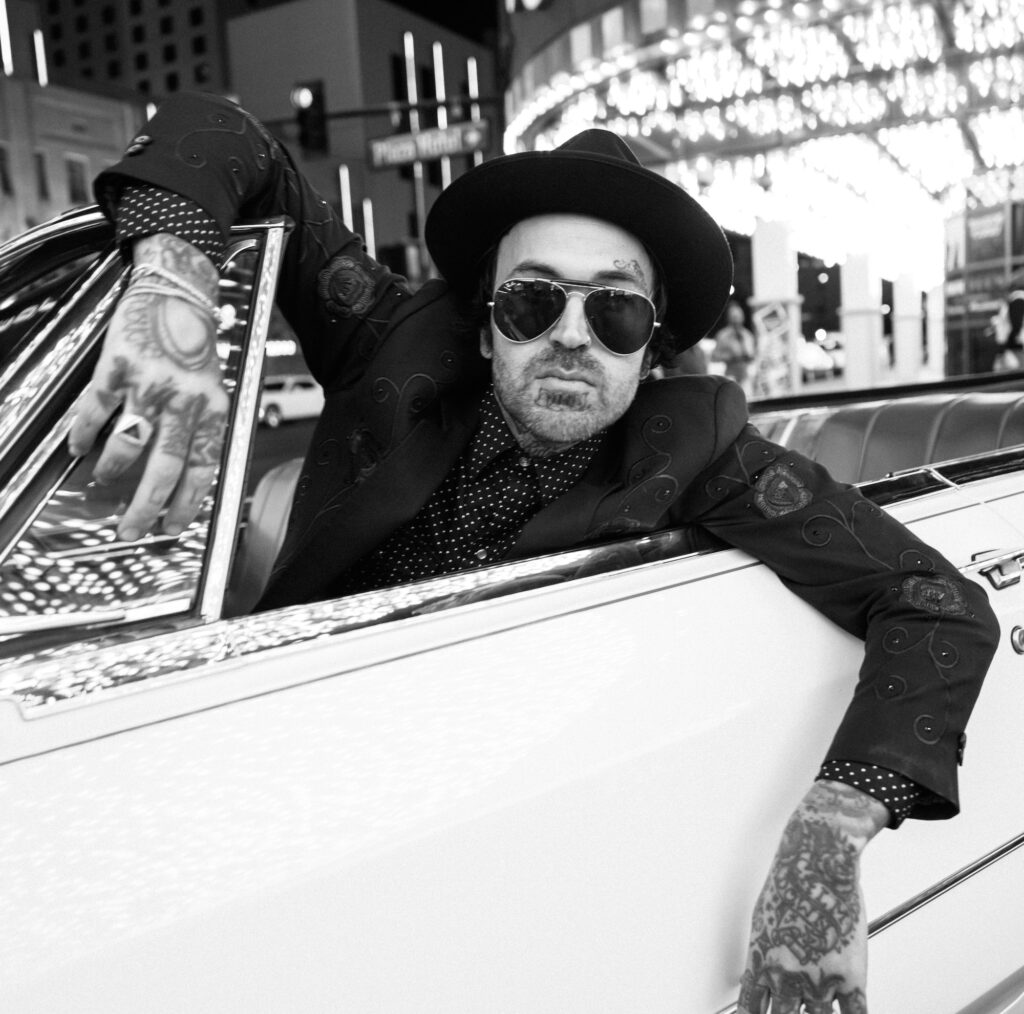
Two music videos appear similar to some viewers.
That observation has already become a copying question.
The evidence has not caught up.
AllHipHop published a comparison on October 2, 2026, involving Yelawolf’s “My Country” video and Skynny Rogers’ “Ain’t My Fault.” The outlet said viewers had identified apparent visual similarities between the videos, while explicitly acknowledging that there is no proof either artist copied the other.
That distinction should control the story.
Neither artist is quoted in the report accusing the other of copying. No lawsuit, copyright claim or platform takedown notice appears in the reviewed material. At this stage, this is a media and audience comparison—not a documented legal dispute or proven case of creative appropriation.
The confirmed timeline begins with the music.
A dated Remix DJ Pool listing shows that clean, explicit and instrumental versions of Rogers’ “Ain’t My Fault” were circulating by August 1, 2026. That proves the song had entered promotional distribution by that date.
It does not establish when the video was released.
AllHipHop reported that the “Ain’t My Fault” visual was circulating before “My Country,” but its article did not provide a verifiable upload date or working source link for Rogers’ video. Without that record, the precise public-release chronology remains incomplete.
Yelawolf’s side of the timeline is clearer. His official YouTube channel published the “My Country” audio on September 3, followed by the official video on September 4. Yelawolf’s upload credits Evan Aparicio as the video’s director.
That tells us when “My Country” became public. It does not tell us when the concept was developed, when production began or what material the creative team had seen beforehand.
And that is only one of the problems with the copying debate.
AllHipHop’s report does not identify the specific shots, props, locations or narrative ideas said to overlap. Readers therefore cannot use the article alone to determine whether the resemblance involves a few familiar images or a highly distinctive sequence of creative choices.
Similarity has degrees.
Two videos sharing a general mood is not the same as reproducing an unusual scene, visual progression or exact composition. Without documented examples, the conversation jumps from “these feel alike” to “somebody copied” without showing the steps in between.
The available reporting also offers no verified response from Yelawolf, Rogers or Aparicio. AllHipHop describes Rogers as an independent artist originally from Florida and based in Nashville, and says Rogers and Yelawolf know each other and previously exchanged words online. The report does not reproduce or link those alleged exchanges.
That means the public cannot independently evaluate what was said, when it was said or whether those conversations had anything to do with the videos.
Silence from either artist should not be treated as an admission. Neither should a provocative headline be mistaken for a completed investigation.
Even a confirmed earlier upload date for Rogers would not settle everything. Public release is only one part of chronology. To examine whether copying occurred, the more useful questions would concern when each video was conceived, treated, filmed and edited.
Production records could matter. Dated treatments, drafts, call sheets, communications and file histories could help establish who developed particular ideas and when.
Access would matter too.
Even if “Ain’t My Fault” appeared online first, that would not prove Yelawolf, Aparicio or another member of the “My Country” team watched it before creating their video. An earlier publication date establishes availability—not awareness.
Coincidence remains possible. Shared influences remain possible. Inspiration or deliberate imitation also remain possible.
None has been proven.
The attention could still affect both artists. For Rogers, the comparison may introduce his work to people who had never heard his name. But that exposure carries a tradeoff: “Ain’t My Fault” may become defined primarily through its relationship to Yelawolf rather than through Rogers’ own creative identity.
For Yelawolf and Aparicio, repetition alone can make the suggestion feel established. Once “Did he copy?” circulates long enough, some people remember the accusation and forget that the evidence was never produced.
That is how the attention cycle works. A question becomes a post. The post becomes a debate. The debate becomes a reputation.
The missing facts remain the same: no verified release date for Rogers’ video, no documented production timelines, no identified matching shots, no proof of access and no direct accusation from either artist.
The comparison has attention. The copying claim still lacks proof.
REALITY CHECK: Similarity Is Not a Timeline
Seeing two similar outcomes does not reveal how either one was created.
That applies to music, video, fashion, design and any work built from ideas that may share the same cultural influences. Sometimes resemblance is coincidence. Sometimes it comes from a common reference. Sometimes one person really did borrow too much.
The image alone cannot tell you which explanation is true.
That is why creators should preserve records: dated drafts, treatments, session files, emails, messages and production schedules. Those documents may feel unimportant while the work is being made, but they become valuable when somebody questions ownership later.
This does not mean artists need to turn every resemblance into litigation. It means fast public conclusions should not carry more weight than the evidence available to test them.
Attention rewards the loudest interpretation. Reputations absorb the cost when that interpretation is wrong.
Something looking similar does not prove who created it first. Timelines and receipts matter more than volume.
LET’S TALK ABOUT IT
What evidence should a music outlet establish before framing two videos as a possible copying dispute: matching scenes, production dates, proof of access—or all three?
If an unproven comparison introduces an independent artist to a larger audience, does that exposure help the artist—or trap the work inside somebody else’s story?
Share your take below—because creative-credit conversations need more than screenshots and assumptions.