OutKast Turns Atlanta History Into a Business Asset

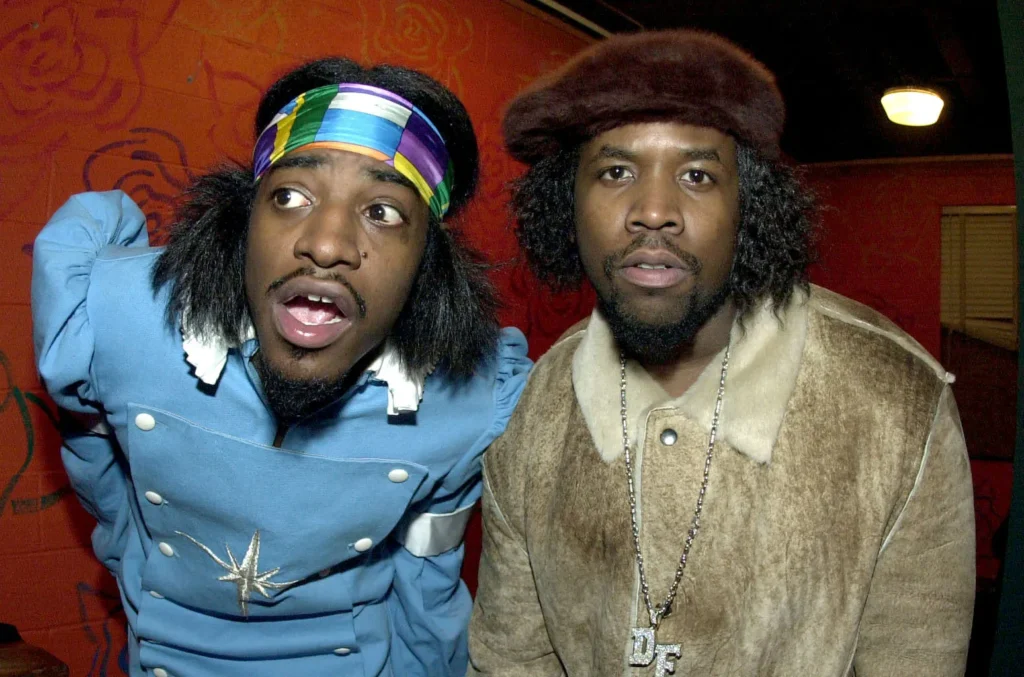
OutKast did not announce a reunion album.
The group did not promise a new single.
Instead, one of hip hop’s most important duos turned decades of Atlanta history into something fans can wear, drink from and even use at the grill.
OutKast and Waffle House launched a co-branded merchandise collection on October 2, bringing together two names deeply connected to Atlanta. The partnership uses OutKast lyrics, imagery and diner-inspired designs across apparel, accessories and household items.
This is merchandise, not new music. But the bigger story is what the merchandise represents.
The campaign started generating attention on September 29, when OutKast teased an announcement with a Waffle House marquee reading “Gator Belts and Patty Melts.” AllHipHop and CBS News Atlanta identified the phrase as a play on Big Boi’s verse from “So Fresh, So Clean.”
The collaboration was formally revealed through a promotional video on September 30, according to CBS News Atlanta. Atlanta News First later reported details of a launch party planned for the Waffle House near Centennial Olympic Park in downtown Atlanta.
When the collection arrived online on October 2, the official OutKast store listed shirts, socks, an apron, a bucket hat, a belt, a hoodie, a poster, a spatula, a mug and a bomber jacket. Publicly listed prices ranged from $25 for the diner mug to $250 for the bomber jacket.
Fans also showed up in person.
Georgia Public Broadcasting reported that people began lining up before sunrise for the downtown launch, which included a DJ, themed menu items and merchandise sales. Axios Atlanta reported that police closed a nearby street to accommodate the crowd.
That response matters because there was no album attached to the event. No tour announcement was required. No surprise verse had to drop at midnight.
The attraction was the meaning already built into the names.
Hip-hop historian NuFace told AllHipHop that the collaboration amounted to “Atlanta history being turned into something you can actually wear.” He argued that OutKast and Waffle House represent different sides of the city while sharing a place in Atlanta’s identity.
That is NuFace’s cultural interpretation, not proof of the partnership’s financial success. Neither company has publicly disclosed how many units were produced, how many were sold or how revenue from the collection will be divided.
Still, his larger point is easy to understand.
OutKast’s value does not live only inside old streaming numbers or physical albums. It also lives in phrases fans recognize immediately, visuals tied to a particular era and a reputation connected to Atlanta’s rise as a center of hip hop.
Waffle House brings its own regional language: late nights, road trips, neighborhood routines and the unmistakable look of a Southern diner. Put those identities together, and the product carries a story before anybody checks the price tag.
That is where the business becomes more interesting than the drop.
For OutKast, the collection demonstrates how a catalog and cultural identity can continue creating opportunities without another studio album. The duo’s work can move through fashion, lifestyle products and regional partnerships while the original music remains the foundation.
It may also give younger consumers another entry point into the group’s legacy. Somebody can discover the reference through a hoodie, then go back and hear why “Gator Belts and Patty Melts” meant enough to place on a marquee decades later.
But there is a line to watch.
Legacy partnerships work when they feel connected to the culture that created the value. If future collaborations become random logo swaps with no credible relationship to OutKast’s history, the same strategy could start feeling less like preservation and more like overcommercialization.
This partnership avoids that problem because the Atlanta connection is clear. What remains unclear is the business underneath it.
The licensing terms have not been made public. Production numbers and official sales figures are unknown. It has not been confirmed whether André 3000 or Big Boi attended the launch, and neither OutKast nor Waffle House has announced whether the partnership will expand into additional products, restaurant events or archival releases.
AllHipHop also reported that no new OutKast music had been announced as of October 3. Anything beyond the merchandise collection would therefore be speculation.
For now, OutKast has shown that silence in the studio does not mean inactivity in the marketplace. A group can stop releasing albums together while its words, images and hometown connection continue carrying commercial weight.
The headline is the merchandise. The real business is the legacy.
REALITY CHECK: Protect What You Build
Here is the lesson beyond OutKast.
Something you create today could still produce opportunities 10 or 20 years from now. A song can become a campaign. A phrase can become a design. A reputation can open a partnership that did not exist when the original work was made.
But longevity is not automatic.
Creators and business owners have to document their work, understand their contracts and know who controls the intellectual property. Short-term attention can feel valuable, but attention disappears quickly when somebody else owns the name, image or idea that attracted it.
That does not mean every creation will become a major licensing opportunity. It means ownership keeps the possibility alive.
Reputation matters too. A catalog can generate interest, but the story around that catalog helps determine which brands want to stand beside it. OutKast’s Atlanta identity was built through music, language and years of cultural credibility. The Waffle House collection draws from that history because the history was strong enough to survive beyond a release cycle.
Talent creates the opportunity. Stewardship keeps it valuable.
LET’S TALK ABOUT IT
Does a partnership like this strengthen OutKast’s legacy by keeping it active, or does turning cultural history into products risk weakening what made it meaningful?
What are you building today that could still carry value 10 or 20 years from now—and are you protecting it properly?
Drop your perspective below—because the difference between a moment and an asset deserves a real conversation.