Jim Jones Could’ve Signed Drake AND J. Cole — Now He Admits He Blew the Bag

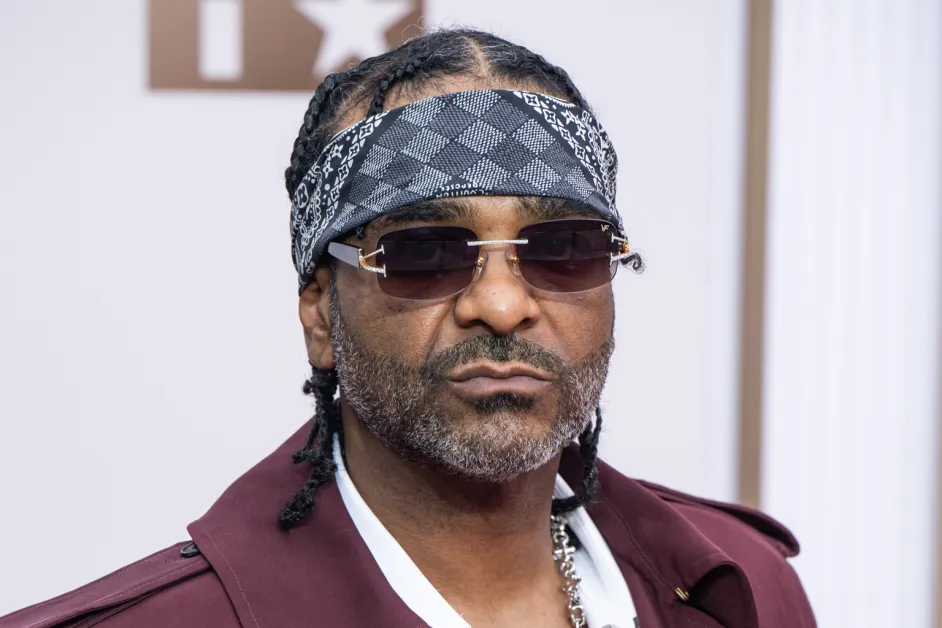
There are missed opportunities, and then there’s finding out you could’ve been involved with Drake and J. Cole before either one became Drake or J. Cole.
Jim Jones has been around hip-hop long enough to have some incredible stories, but this might be one of the most painful.
During a recent appearance on Mornings With Mero on Hot 97, Jones revisited the fact that he had early opportunities involving both future superstars and couldn’t figure out what to do with either one.
Looking back now, Jim isn’t trying to rewrite history or pretend he knew exactly what he was looking at.
He basically admits he blew it.
And honestly, that’s what makes the story so good.
Because it’s easy to look at Drake and J. Cole in 2026 and say, “How could anybody possibly pass on them?”
But Jim Jones wasn’t looking at 2026 Drake and J. Cole.
He was looking at two young artists who didn’t necessarily fit his understanding of what was working around him at the time.
That’s a completely different conversation.
Jim Knew Drake Could Rap — He Just Didn’t Know What to Do With Him
According to Jones, he heard Drake early and recognized that he was talented. The problem wasn’t necessarily the music.
The problem was the package.
Drake was Canadian. He had been an actor on Degrassi. Meanwhile, Jim Jones was coming from Dipset, Harlem and a completely different street-oriented version of hip-hop.
Jones essentially admitted that he couldn’t figure out how those worlds were supposed to connect.
And you have to remember what hip-hop looked like then.
Today, Drake being from Toronto barely requires an explanation. He’s spent nearly two decades helping turn Toronto into one of the most recognizable cities in modern hip-hop and R&B.
But before Drake became Drake, being a Canadian former teenage television actor trying to enter American rap wasn’t exactly the most obvious blueprint for superstardom.
Jim said Drake was nice.
He simply couldn’t see the business.
Then about a year later, he heard Drake alongside Lil Wayne.
You can probably imagine that feeling.
It’s like somebody showing you a stock at five dollars, you pass on it, and then a year later somebody pulls up the chart.
Except this particular stock eventually became Drake.
Then J. Cole Walked Through the Door
If passing on Drake wasn’t painful enough, somehow J. Cole entered the story too.
Jones recalled that while he was signed to Sony, Cole regularly recorded at his studio.
Again, we’re talking about young J. Cole, not the established superstar people know today.
And Jim’s assessment is hilarious in hindsight because he remembers basically telling Cole that he looked like Drake, sounded like Drake and Jim didn’t know what to do with that either.
Think about that.
The first Drake confused him.
Then somebody who reminded him of Drake showed up, and that confused him too.
Meanwhile, both men eventually became two of the defining rappers of their generation.
Jones doesn’t sugarcoat what happened when he tells the story today. Looking back at the money he potentially left on the table, his assessment was pretty straightforward:
He messed that bag up.
Badly.
But Everybody Is a Genius in Hindsight
This is where I think the story gets much more interesting than simply laughing at Jim Jones.
Because right now, passing on Drake sounds insane.
Passing on J. Cole sounds insane.
Passing on both sounds like somebody should’ve confiscated your A&R card immediately.
But hindsight cheats.
We know how the movie ends.
Jim didn’t.
He wasn’t evaluating the guy who would eventually become one of the most commercially dominant rappers in history. He was evaluating an unknown Canadian actor who rapped.
He wasn’t evaluating the established J. Cole whose career would eventually include major albums, tours and Dreamville. He was evaluating a young rapper trying to convince somebody that he deserved an opportunity.
That’s what makes talent evaluation so difficult.
You aren’t choosing between superstars.
You’re choosing between possibilities.
And possibilities usually arrive without the résumé attached.
Sometimes the Thing That Makes Somebody Difficult to Understand Is Exactly What Makes Them Valuable
This might be the most fascinating part of the entire story.
Jim’s problem wasn’t that Drake and Cole had no talent.
He couldn’t figure out where they fit.
But maybe that was exactly the point.
Drake didn’t fit neatly into the existing model because he was helping create another one.
He could rap, sing, make relationship records, make street records, work with Southern rappers, collaborate with R&B artists and bring a completely different cultural background into mainstream hip-hop.
That versatility eventually became part of his advantage.
Cole had a different problem. He wasn’t necessarily trying to become the Harlem street rapper Jim understood either. His identity was more introspective, college-educated and grounded in a different experience.
Again, what looked like a marketing problem could eventually become part of the reason people connected with him.
That’s something the entertainment industry gets wrong all the time.
People say they want something new, but when something genuinely new appears, the first question is usually:
“What existing thing does this remind me of?”
Sometimes the better question is:
“What if there isn’t a category for this yet?”
Imagine the Alternate Hip-Hop Timeline
This is also just fun to think about.
What happens if Jim Jones actually gets behind Drake?
Does Drake still connect with Lil Wayne?
Does Young Money happen the same way?
Does Drake’s sound develop differently?
What if Jim recognizes J. Cole immediately?
Does Cole still eventually connect with Jay-Z and Roc Nation?
Does Dreamville become what it became?
Nobody knows.
And that’s why I wouldn’t automatically assume signing either artist would have produced the same career we eventually witnessed.
The right artist with the wrong situation can still fail.
Sometimes getting rejected is part of what pushes somebody toward the place they’re actually supposed to be.
J. Cole himself recently reflected on being grateful that Jay-Z didn’t push him into the spotlight too early, because timing can shape an artist just as much as opportunity does.
That’s another part of success people overlook.
Getting an opportunity matters.
Getting the right opportunity at the right time can matter even more.
Jim Jones Still Deserves Credit for Admitting It
I actually respect the way Jones tells the story because there’s no elaborate excuse.
He could easily say Drake wasn’t ready.
He could claim Cole wasn’t developed enough.
He could pretend somebody else made the decision.
Instead, Jim basically looks back and says: I didn’t understand it.
That’s refreshing.
Especially in hip-hop, where everybody somehow claims they predicted everything after it becomes successful.
Every legendary rapper apparently had twenty people who “always knew” they were going to become a superstar.
Jim Jones is telling the opposite story.
He saw the talent.
He had access.
And he still missed it.
That might actually be more useful than another success story.
REAL TALK
Most people are going to hear this story and think about the money Jim Jones potentially missed.
And yeah, that number could be ridiculous.
But I think there’s a better lesson buried inside it.
Sometimes opportunities don’t look like opportunities because we’re judging them according to what worked yesterday.
Jim understood a particular version of hip-hop. He understood Harlem. He understood Dipset. He understood street records, fashion, swagger and the culture surrounding the movement he helped build.
Then Drake walks in.
How does a Canadian kid from Degrassi fit into that?
Maybe he doesn’t.
And that was the mistake.
Sometimes instead of asking how something fits into the world you already understand, you have to ask whether you’re looking at something capable of creating a different world.
That applies way beyond music.
Businesses miss new technology because it doesn’t resemble the product already making them money.
Companies overlook employees because their résumé doesn’t look traditional.
People dismiss business ideas because nobody else is doing them.
Sometimes we even do it with people. Somebody doesn’t look, talk, dress or come from the background we associate with success, so we underestimate what they might become.
Then five years later everybody says it was obvious.
It usually wasn’t obvious.
That’s why vision is valuable.
Vision isn’t recognizing Drake after “God’s Plan.”
Anybody can do that.
Vision is looking at Aubrey Graham from Degrassi before the machine exists and seeing something everybody else hasn’t figured out yet.
The same goes for Cole.
And here’s the other side of it: if you’re the person being overlooked, don’t automatically assume rejection means you’re wrong.
Sometimes the person evaluating you simply doesn’t have the imagination required to understand you yet.
That doesn’t make them stupid.
And it doesn’t automatically make you a future superstar.
It just means one person’s inability to see your path doesn’t mean the path isn’t there.
Jim Jones couldn’t figure out what to do with Drake and J. Cole.
Fortunately for Drake and J. Cole, somebody else eventually did.
And fortunately for Jim, he can laugh about it now.
Although I’m pretty sure every time he looks at what those careers became, that laugh probably hurts just a little bit.
LET’S TALK ABOUT IT
What’s worse: passing on Drake because you couldn’t understand how a Canadian actor fit into hip-hop, or having J. Cole come through your studio afterward and somehow passing on him too?
But here’s the bigger question: How do you recognize something truly groundbreaking when the very reason it’s special is that it doesn’t look like anything that’s already successful?
And if Jim Jones had actually signed Drake or J. Cole, do you think they still become the same superstars—or did getting passed over ultimately put them on the paths they needed?