50 Cent Blasts Verizon’s CEO — But STARZ Still Controls How His Shows Reach Fans

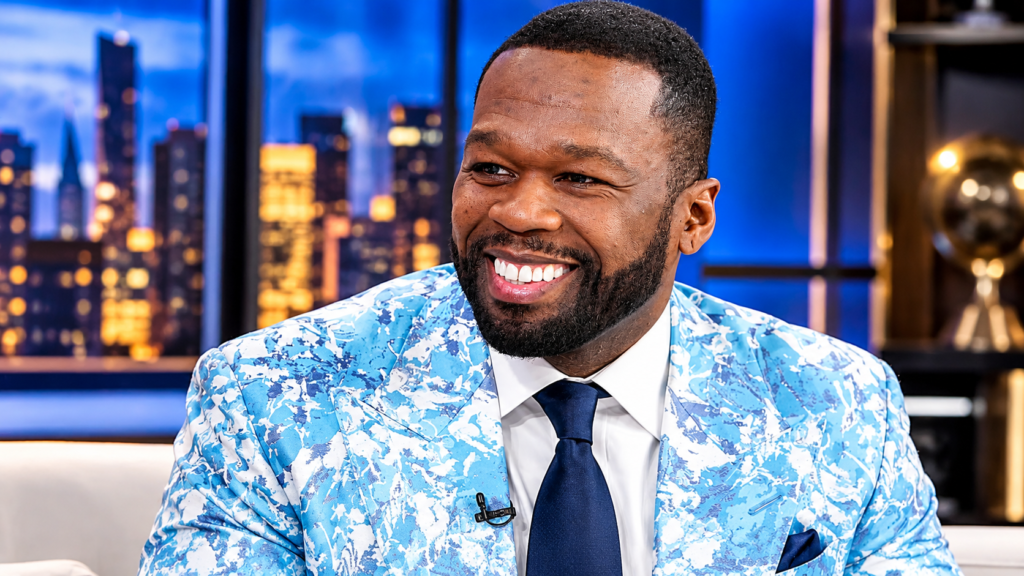
50 Cent helped turn the Power universe into one of STARZ’s defining franchises.
That does not mean he controls how viewers receive it.
STARZ disappeared from Verizon Fios after the companies failed to renew their distribution agreement before it expired on September 30. According to STARZ, affected customers lost every STARZ channel, its on-demand programming and the ability to access the STARZ app through their Verizon credentials.
The blackout includes programming closely connected to 50 Cent and G-Unit Film & Television. STARZ specifically named the complete Power universe and the forthcoming Power: Origins among the titles no longer available through Fios. The dispute also affects access to Fightland, which premiered on STARZ on July 31.
Now 50 has turned a carriage dispute into his latest public battle.
In an October 1 social-media post reported by AllHipHop, 50 declared a “new beef” and attacked Verizon CEO Dan Schulman over the blackout. Verizon’s corporate biography identifies Schulman as the company’s chief executive and says he assumed the position in October 2025.
50 claimed Schulman believed people in New York and New Jersey were not watching STARZ and had decided there was “no need for diversity.”
That is 50’s characterization.
No reviewed statement from Schulman confirms that he made those remarks or expressed that position. STARZ’s own announcement also said the blackout affects Verizon Fios customers generally, not only subscribers in New York and New Jersey.
The post applies pressure. It does not establish what happened inside the negotiations.
STARZ and Verizon are offering different explanations for why the agreement collapsed.
STARZ Networks President Alison Hoffman said Verizon “chose to remove STARZ,” misrepresented the network’s position and refused to negotiate productively. Those are STARZ’s claims in an unresolved commercial dispute.
Before the cutoff, Verizon said it remained involved in constructive discussions and wanted to preserve diverse programming without increasing customers’ bills, according to AllHipHop. The reviewed sources did not include a detailed post-blackout response from Verizon addressing STARZ’s latest accusations.
Neither company has publicly disclosed its proposed carriage fees, contract language or the exact points that prevented a renewal.
That missing information matters.
A carriage agreement determines whether a television provider can include a network’s channels and related access within its service. STARZ controls its programming package. Verizon controls the Fios relationship through which its customers receive that package. If those companies cannot agree on price and terms, the connection between the shows and part of their audience can disappear.
The customer sees a blank space.
Behind it is a fight over money, access and leverage.
For 50 Cent, the situation is bigger than another entertaining social-media feud. His television business remains tied to some of the programming caught inside the blackout.
Netflix confirmed on July 27 that 50 remains an executive producer of the Power franchise through G-Unit Film & Television. Sky announced on February 26 that he executive-produced Fightland through the same company, and STARZ promoted the series as a project from 50 Cent before its July premiere.
That gives him a clear reason to push back when viewers lose access.
It does not mean 50 owns STARZ, controls the Power distribution rights or has authority over the Verizon agreement. The reviewed sources establish his production role, not control of the network or its delivery system.
That is where the real business lesson begins.
G-Unit Film & Television can help develop and produce programming audiences want. STARZ can package that content as part of its network and streaming offering. Verizon can decide whether the terms for carrying that package work for its Fios business.
Each party controls a different section of the chain.
50’s influence comes from his name, his audience and the value of the television properties connected to his company. A public campaign could create pressure by making subscribers aware of what they have lost and directing frustration toward Verizon.
But attention is not the same as contractual power.
Only STARZ and Verizon can resolve the distribution dispute. Without access to the proposed fees and terms, outsiders cannot fairly determine which company is being unreasonable or which side would ultimately force customers to absorb higher costs.
Several questions remain open. When will serious negotiations resume? How long will the blackout continue? Will affected subscribers receive credits or refunds? Can 50’s public pressure move either company closer to a deal?
There is also a longer-term question for G-Unit Film & Television: how can a company built around valuable programming reduce its dependence on distribution decisions made by other businesses?
Because creating the show and reaching the viewer are not the same job.
The content creates demand. The pipeline decides who gets access.
REALITY CHECK: The Route to the Customer Is Part of the Product
People love talking about ownership, especially in hip hop.
Own the music. Own the company. Own the idea.
All of that matters. But ownership and production do not automatically provide direct access to the customer. A creator can make valuable work and still depend on a network, streaming service, social platform, retailer or distributor to deliver it.
That does not mean the creator has no leverage. Strong content gives platforms something worth carrying, and a loyal audience can create pressure when access disappears.
It means leverage has layers.
You can control the product without controlling the platform. You can control the brand without controlling the algorithm. You can build demand without owning the relationship where customers pay.
The same principle applies far beyond television. Artists, independent labels and entrepreneurs can spend years building something real, then discover that one decision by a platform or distributor can interrupt the connection to their audience.
The goal is not always to control every part of the chain. That may be unrealistic.
The goal is to understand which parts you control, where you remain dependent and what options exist if one route suddenly closes.
Building the product creates value. Controlling the route protects the business.
LET’S TALK ABOUT IT
Does 50 Cent’s public pressure give creators meaningful leverage in the STARZ-Verizon dispute, or does the final decision still belong to the companies controlling distribution?
For hip-hop creators expanding beyond music, which matters more over time: owning valuable content or controlling direct access to the audience?
Bring your business perspective to the conversation, because this fight is bigger than one missing channel.