SZA Is Becoming a Legend Right in Front of Us — And We Might Not Realize How Historic This Run Is

There’s a strange thing that happens with great artists. We usually wait until the best years are behind them before we start seriously talking about what they meant.
Then come the documentaries, anniversary albums, lifetime achievement awards and endless conversations about how we should have appreciated them more when they were actually in their prime.
SZA might be forcing us to have that conversation a little earlier.
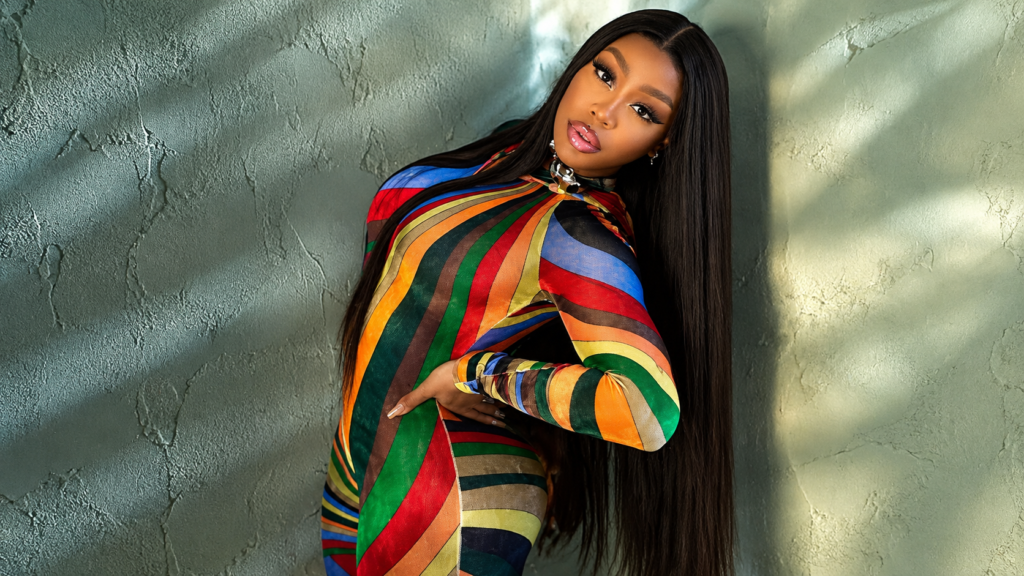
The Grammy-winning singer has officially been inducted into the New Jersey Hall of Fame, putting her alongside Garden State legends like Whitney Houston, Queen Latifah, Bruce Springsteen and Frank Sinatra. That sounds like the type of honor you receive after everybody has already decided where you belong in music history.
Except SZA doesn’t feel remotely finished.
She’s still making major records, touring, experimenting with her sound and expanding beyond music. So instead of New Jersey honoring an artist at the end of an incredible career, it feels like the state is planting a historical marker right in the middle of one.
And honestly, when you start looking at what SZA has already accomplished, maybe they didn’t need to wait.
Jersey Is a Bigger Part of the SZA Story Than Some People Realize
SZA was born in St. Louis, but she was raised in Maplewood, New Jersey, and graduated from Columbia High School. During her Hall of Fame induction, she made it clear that Jersey isn’t simply one of those technical hometown connections that gets added to the first paragraph of an artist’s biography. She considers those communities part of what shaped her.
That actually makes a lot of sense when you think about the music she’s made.
SZA’s career has always been wrapped around questions of identity. Who am I? Where do I belong? Why am I confident today and completely insecure tomorrow? Why do I want somebody I know isn’t good for me? Why am I comparing myself to another woman when I know I shouldn’t?
That’s the stuff that made millions of people connect with her.
She wasn’t singing from some emotionally perfect place where she had all the answers. Half the time, SZA sounded like she was trying to figure things out while the microphone was still recording.
And people heard themselves in that.
So there’s something fitting about an artist whose music constantly explores identity receiving one of her biggest honors from the place that helped shape hers.
SZA Wasn’t Built Like the Traditional R&B Superstar
This might be the most interesting part of SZA’s rise.
She didn’t come into the industry feeling like somebody had assembled her in a conference room to become the next R&B superstar. The music could be weird. The structures weren’t always traditional. The lyrics could get almost uncomfortably personal.
She wasn’t constantly trying to convince you she had everything together.
Sometimes she was jealous.
Sometimes insecure.
Sometimes confused.
Sometimes she knew she was making a terrible relationship decision and basically made the song anyway.
That’s real life.
And somehow SZA turned all of those contradictions into part of her appeal.
R&B has given us plenty of larger-than-life performers, but SZA helped prove that vulnerability could become its own form of star power. You didn’t always have to sound emotionally invincible. Sometimes admitting that you’re a mess connects more deeply than pretending you’re untouchable.
Then Ctrl came along and simply refused to disappear.
Ctrl Didn’t Just Become Successful — It Became Part of People’s Lives
Released in 2017, Ctrl developed the kind of longevity artists dream about.
According to the New Jersey Hall of Fame, it became the first album by a female artist to spend 460 consecutive weeks on the Billboard 200 and reached 6× Platinum certification.
Think about what that actually means.
People who discovered Ctrl as teenagers have grown into adults with jobs, children, marriages, divorces and completely different lives, and they’re still listening to the same project. Meanwhile, younger listeners who weren’t there when the album dropped keep discovering it.
That’s when an album becomes bigger than its release cycle.
It starts attaching itself to people’s memories.
Certain songs remind you of relationships. Others remind you of breakups. Some take you back to a particular apartment, car, college dorm or person you probably shouldn’t text anymore.
That’s staying power you can’t manufacture.
And if anybody thought Ctrl was simply one magical moment, SOS pretty much killed that argument.
SOS Changed the Conversation
Following a beloved album is difficult because eventually the first project becomes almost impossible to compete with. Fans aren’t simply comparing your new music to the old music anymore. They’re comparing it to how the old music made them feel during a particular period of their lives.
SZA somehow cleared that hurdle.
SOS debuted at No. 1 and spent 13 weeks on top of the Billboard 200. According to the Hall of Fame, it reached 8× Platinum and became the first album by a female artist to spend 100 weeks inside the Billboard 200’s Top 10.
At that point, we’re not talking about somebody who made one cult classic.
We’re talking about a global superstar.
What makes it more impressive is that SZA didn’t seem to become bigger by sanding down everything that made her unusual. Usually the larger an artist gets, the more pressure there is to make everything cleaner, safer and easier to market.
SZA somehow made the strange parts part of the mainstream appeal.
That’s difficult.
The Numbers Are Starting to Get Ridiculous
Once you step back from the individual songs and look at the entire résumé, the Hall of Fame induction starts making a lot more sense.
SZA is a seven-time Grammy winner, and the New Jersey Hall of Fame credits her with more than 70 billion streams across platforms. Her honors include Grammys connected to records and projects including “Snooze,” “Saturn,” SOSand “luther” with Kendrick Lamar.
She’s also become a major touring attraction, first through the SOS Tour and later alongside Kendrick Lamar on the Grand National Tour.
Those aren’t niche R&B numbers anymore.
That’s worldwide superstar territory.
Yet somehow SZA can still make music that feels like somebody wrote it in their Notes app at three o’clock in the morning after making a decision they already know they’re going to regret.
That’s probably the secret.
The audience became enormous without the emotions becoming distant.
Her Parents Made the Hall of Fame Moment Even Better
One of my favorite details from the ceremony was SZA’s parents, Audrey and Abdul Mubarak-Rowe, participating in her induction.
Her father talked about listening to Ctrl and feeling like the album allowed him to discover another side of his daughter.
That’s actually wild when you think about it.
Millions of strangers listened to SZA’s music and felt like they understood her insecurities, relationships and inner thoughts. But imagine being her father and having that same experience.
You’re sitting there listening to the same album everybody else is discussing and realizing, “This is my daughter’s inner world.”
That’s one of the strange things about songwriting. Sometimes artists explain themselves more honestly to millions of strangers than they ever could sitting across the dinner table from the people who raised them.
And Then There’s the Lauryn Hill Connection
Here’s a piece of Jersey music history I love.
SZA attended Columbia High School in Maplewood.
So did Lauryn Hill.
Think about that.
Two Black women from the same high school, separated by generations, both eventually became globally influential artists while sounding nothing alike.
That’s what influence sometimes looks like.
It doesn’t always mean somebody copying another artist’s sound or style. Sometimes seeing somebody from a place that looks like yours accomplish something enormous simply changes what you believe is possible.
And now SZA becomes that person for somebody else.
Some girl in New Jersey is eventually going to walk through some of the same places SZA walked through and think, “She came from here too.”
That matters.
SZA Also Represents What Happened to Genre
Try putting SZA into one clean category.
R&B obviously works, but it doesn’t completely explain her.
There’s alternative R&B, pop, hip-hop, soul, indie textures and occasional rock influences running through the music. Sometimes it feels like she couldn’t care less which section of the record store a song would have belonged in twenty years ago.
That’s modern music.
Streaming helped weaken a lot of the old walls between genres because listeners don’t organize their taste the same way record labels and record stores once did.
Somebody’s playlist might go from SZA to Kendrick Lamar to a rock record to an old-school soul song without anybody thinking twice about it.
SZA fits that world perfectly because the genre can change without the identity disappearing.
Whatever she’s singing over, it still sounds like SZA.
That’s much more valuable than fitting neatly inside a category.
Music Might Only Be the Foundation
We’re also starting to see SZA expand beyond recording.
The Hall of Fame highlighted her movement into film and business, including her 2025 appearance in One of Them Days, the launch of NOT Beauty and her work as an artistic director for Vans.
And this is something we’ve talked about repeatedly with Hip Hop Rotation.
The modern artist doesn’t necessarily have to view music as the entire business anymore.
Music can be the foundation.
Jay-Z used it to enter other industries. 50 Cent used it to build businesses and eventually become a major television producer. Other artists have followed completely different paths.
SZA is figuring out what her version looks like.
That’s another reason I don’t think we fully know what her career is going to become yet.
Maybe music remains the center of everything. Maybe film becomes much bigger. Maybe fashion and beauty become serious businesses. Maybe she creates something we haven’t associated with her at all yet.
That’s the interesting part.
She already has a Hall of Fame résumé, and she’s still building the résumé.
REAL TALK
We have a habit of appreciating greatness late.
It’s almost like somebody has to disappear before we’re comfortable calling what they did historic.
An artist retires and suddenly everybody talks about how important they were. Somebody dies and people who haven’t listened to their music in fifteen years start explaining why they were a legend. Twenty years pass and an album gets a documentary, and suddenly everybody remembers how groundbreaking it was.
Maybe we should get better at recognizing these things while they’re happening.
That doesn’t mean every successful artist needs to be called a legend after three albums. We throw that word around way too easily already.
But longevity matters. Influence matters. Numbers matter. Cultural impact matters. And when you start stacking those things together, SZA’s résumé is becoming difficult to dismiss.
Ctrl has demonstrated extraordinary staying power. SOS became an even bigger commercial phenomenon. She’s won major awards, generated tens of billions of streams, filled arenas and started expanding into other areas of entertainment and business.
And somehow it still feels like we’re discussing somebody in the middle of her career rather than somebody looking back on it.
That’s what makes this Hall of Fame induction different.
New Jersey isn’t closing the book on SZA.
It’s basically saying, “We’ve already seen enough to know this belongs in the history of our state.”
There’s something powerful about getting your flowers while you’re still around to smell them, but there’s something even better about receiving them while you’re still planting.
SZA doesn’t have to stop tomorrow for this moment to mean something.
Actually, the possibility that she’s nowhere near finished is what makes it more interesting.
Years from now, we may look back at this period and talk about SZA as one of the artists who helped redefine what R&B could sound like, what vulnerability could look like in popular music and what a modern superstar could become without sanding away everything that originally made her different.
New Jersey apparently decided it didn’t need another decade to figure that out.
The place that helped shape Solána Rowe is already calling SZA one of its legends.
Now we get to see what she does with the rest of the story.
LET’S TALK ABOUT IT
Has SZA already done enough for you to consider her one of the defining R&B artists of her generation, or do we sometimes crown artists too early because we’re caught up in what they’re doing right now?
And here’s the harder one: Twenty years from now, when people talk about the artists who defined this era of R&B, where do you think SZA’s name will belong in that conversation?