Why the Beatmaker Is Becoming the Star!

For a long time, producers were some of the most important people in hip-hop that the average fan couldn’t recognize if they walked right past them.
You knew the rapper. You knew the song. You probably knew every word to the hook.
But the person who actually built the sound underneath all of that? Unless you were somebody who read album credits, bought production magazines or really studied hip-hop, you might not have had a clue.
That’s changing.
Today, especially in underground and independent hip-hop, the producer isn’t always sitting quietly behind the artist anymore. Producers are building their own brands, developing their own fan bases, releasing collaborative albums and sometimes becoming just as important to the identity of a project as the rapper whose name is on it.
And the funny thing is, hip-hop has been here before.
The Producer Used to Mean Something Different
Think about some of the great producer-artist relationships in hip-hop.
When you heard DJ Premier working with Gang Starr, that production wasn’t simply background music. Premier was part of the identity.
The same could be said about RZA and Wu-Tang Clan.
Pete Rock and CL Smooth.
Havoc and Mobb Deep.
Dr. Dre didn’t just produce records—his sound became one of the biggest selling points attached to them.
Then you had producers like J Dilla, Madlib, DJ Quik, Timbaland, The Neptunes and later Kanye West who made people actually pay attention to who created the beat.
You could sometimes hear four bars and know who produced the record.
That matters.
Because the best producers don’t just make beats.
They create environments.
A rapper walks into that environment and has to figure out what to do with it.
Then Hip-Hop Became a Beat Marketplace
Technology changed that relationship dramatically.
Once beatmaking moved heavily into laptops and digital production, you didn’t necessarily need a major studio or thousands of dollars worth of equipment anymore. Then online beat marketplaces, YouTube, email and social media made it possible for somebody sitting in their bedroom to produce records for artists they had never even met.
That democratized production.
And that’s a great thing.
There are talented producers all over the world who probably never would have gotten an opportunity under the old system.
But it also changed the way beats were treated.
Instead of a producer and rapper sitting together and developing a sound, production could become almost transactional.
“Send me some beats.”
Anybody who has spent time around modern independent music has probably heard that sentence a thousand times.
A producer sends a folder with 20 beats. The rapper picks two. Records something. Maybe the producer never even attends the session.
That’s efficient.
But there’s something different about two people actually building a record together.
And that’s part of why what’s happening in the underground right now is so interesting.
The Producer Album Is Back in a Big Way
One of the strongest movements in underground hip-hop has been the return of the rapper-producer project.
Instead of an artist grabbing beats from eight different producers, one producer might handle an entire album.
Now the producer isn’t just supplying instrumentals.
They’re helping establish the world the album lives in.
Look at somebody like The Alchemist.
His career goes back decades, but his presence in modern underground hip-hop is a perfect example of how valuable producer identity has become. His collaborative catalog includes full projects with artists including Freddie Gibbs, Boldy James, Larry June and Armand Hammer.
Madlib has operated similarly throughout his career, including his acclaimed collaborations with MF DOOM and Freddie Gibbs.
Then you’ve got producers such as Conductor Williams, Daringer, Harry Fraud, Nicholas Craven and others whose names increasingly mean something to the audience before the rapper even starts rhyming.
That’s important.
Because when fans see certain producer names attached to a project, they’re already expecting a particular experience.
That’s branding.
Griselda Helped Remind People That Production Matters
You can’t really have this conversation without talking about the influence surrounding Griselda.
Westside Gunn, Conway the Machine and Benny the Butcher helped bring grimy, sample-heavy production back into conversations at a time when much of mainstream rap production was moving in other directions.
And producers became a huge part of that identity.
Daringer wasn’t simply the guy making beats behind the scenes.
His production helped establish the atmosphere.
Dark samples.
Hard drums.
Sometimes hardly any drums at all.
Music that sounded dirty on purpose.
Then you had producers like The Alchemist and Conductor Williams working within and around that world.
Suddenly a generation of listeners who may not have grown up studying Pete Rock, DJ Premier or RZA was being introduced to another version of producer-driven hip-hop.
Not because somebody gave them a history lesson.
Because the music sounded good.
That’s how culture usually works.
Producer Tags Changed Everything Too
There’s another reason producers are more recognizable today.
They started announcing themselves.
Producer tags became one of the smartest branding tools in modern hip-hop.
Metro Boomin wants some more.
Mustard on the beat.
We got London on da Track.
Those few seconds can turn somebody who never reads production credits into somebody who immediately recognizes the producer.
That’s powerful.
Imagine hearing a photographer’s name every time you looked at a photograph.
Eventually you’d start remembering who took the pictures.
Producer tags basically did that for beats.
They taught listeners to associate sounds with names.
Social Media Put the Producer in Front of the Camera
There’s another major difference between today’s producer and the producer from 25 years ago.
We can actually watch them work.
YouTube changed that.
Instagram changed it.
TikTok changed it.
Streaming changed it.
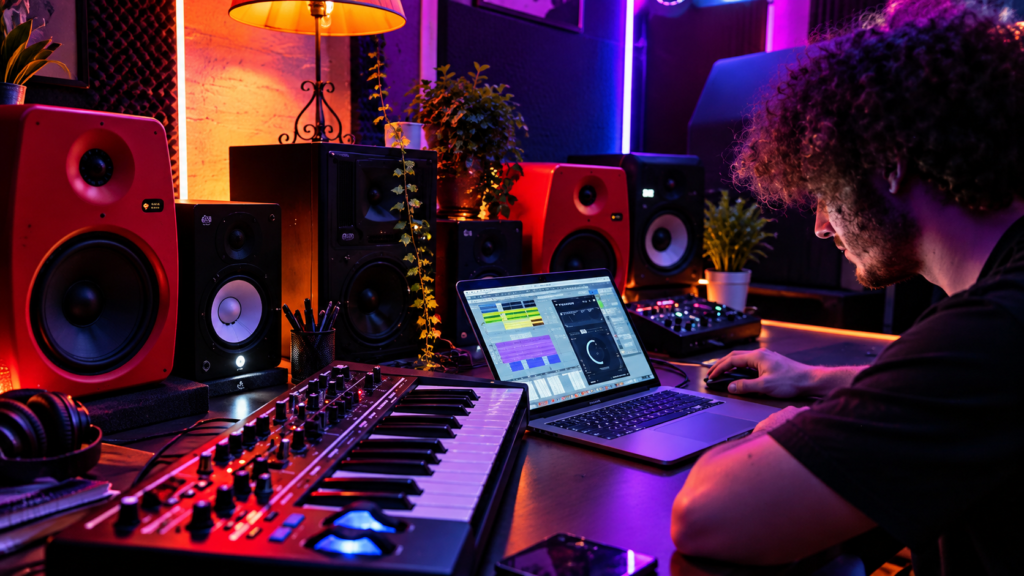
Now fans can watch somebody chop a sample, program drums, explain what equipment they’re using and build a beat from scratch.
That might sound like something only producers would care about, but it creates another kind of celebrity.
People become fans of the process.
That’s why beatmaking videos can attract huge audiences even when there’s no rapper involved.
The beat itself becomes entertainment.
And that gives producers something they didn’t always have:
their own audience.
That’s Where the Real Power Comes From
If you’re a producer and the only people who know your name are rappers, you’re dependent on rappers.
But if listeners know your name?
Now you’re building your own business.
You can release instrumental albums.
You can headline shows.
You can sell sample packs.
You can collaborate with different artists.
You can build a YouTube channel.
You can sell merchandise.
You can create production courses.
You can release your own projects through streaming platforms.
Most importantly, your career doesn’t have to depend entirely on one artist becoming successful.
That’s a major shift.
The producer can become the platform.
But There’s Something Bigger Happening
What I find most interesting is that this movement is helping bring personality back into production.
There are millions of beats online.
That’s not an exaggeration in spirit. Type almost any major rapper’s name followed by “type beat” into YouTube and you’ll find an endless supply.
So simply knowing how to make a good beat isn’t enough anymore.
You need identity.
What makes somebody hear your production and say:
“I know who made that.”
That’s the real challenge.
Because hip-hop doesn’t need another thousand producers copying whatever drum pattern is popular this month.
It needs producers with fingerprints.
The people who make records that sound like them.
That’s what made the legendary producers legendary in the first place.
The Beatmaker Was Never Just the Beatmaker
Maybe producers aren’t really becoming stars for the first time.
Maybe listeners are simply paying attention again.
Hip-hop has always depended on the relationship between the MC and the DJ, the rapper and the producer, the voice and the rhythm underneath it.
The producer creates the room.
The rapper walks inside it.
And when those two things fit together perfectly, you get something bigger than a rapper performing over a beat.
You get a sound.
That’s why this resurgence of producer-driven underground hip-hop matters.
It reminds us that sometimes the most important person on the record isn’t the person holding the microphone.
Sometimes it’s the person who made you nod your head before the rapper even said a word.
Hip Hop Rotation Question: Who is one producer working today whose beat you can recognize before you even hear the producer tag?