“We Don’t Own People”: Jay-Z Finally Answers Kanye’s Coldplay Complaint From “Big Brother” — And the Timeline Is More Complicated Than the Lyric

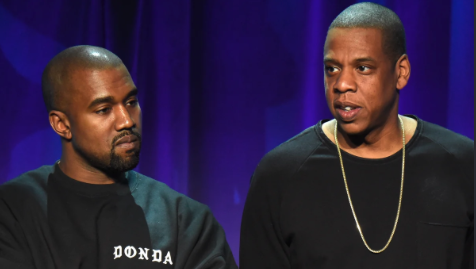
For almost two decades, one of the most quoted moments in Kanye West’s “Big Brother” has been a complaint about the man the song honors. In a few lines, Kanye raps that he told Jay-Z about a song he had recorded with Coldplay, only to find out that Jay-Z soon had a Coldplay song of his own. It gave listeners an early look at the competition running underneath one of hip-hop’s most important partnerships.
Jay-Z has now given his side on camera. In the seventh episode of JAŸ-Z in 8, his HBO docuseries with director and producer Rick Rubin, he revisits the lyric and rejects the idea that working with Coldplay frontman Chris Martin amounted to a betrayal. According to Complex’s recap of the episode, he brought the subject up himself, without being asked.
His explanation is direct. Martin, he says, was already his friend, and he was the person who connected Martin and Kanye in the first place. “Chris [Martin] is my friend. I introduced them,” Jay-Z tells Rubin, in remarks reported by Parade. He goes on to describe Kanye’s reaction as partly a matter of entitlement and argues that no artist has a claim on a collaborator. “We don’t own people,” he says, according to Complex.
Those comments have been widely covered as Jay-Z finally answering an old grievance. But when the songs, the release dates and the accounts of the people who were in the room are placed side by side, the story becomes more layered than either the lyric or the rebuttal suggests.
What Kanye Actually Said on “Big Brother”
“Big Brother” arrived on September 11, 2007, as the thirteenth and final track on Graduation. It was produced solely by DJ Toomp, which makes it the only song on the album without Kanye’s own production, and it tells the story of his relationship with Jay-Z from a younger sibling’s point of view: the admiration, the slights and the rivalry.
The Coldplay reference takes up only a few lines. What often gets left out is what Kanye says about himself. Elsewhere in the song, as both Parade and Complex point out, he turns the criticism inward and admits he should have spoken to Jay-Z directly instead of taking his frustration to someone else first.
That detail matters, because “Big Brother” was never a diss record. It was written as a tribute, and the public record suggests Jay-Z received it that way. On the day Graduation was released, Kanye performed the song on BET’s 106 & Park and Jay-Z came onstage to join him. In a later podcast interview reported by Gulf News, Jay-Z cited the song by name as an example of Kanye talking about him publicly, and said the two had “gotten past bigger issues.”
Two Songs, One Singer, and a Timeline That Cuts Both Ways
The chronology is where the story gets interesting, because each man can point to a date that supports him.
Kanye’s song came first in the studio. According to Abbey Road Studios’ own account of the session, Kanye was working at the London studio in February 2006 during the same week Coldplay recorded a live show there for BBC Radio 2. Engineer Mirek Stiles recalled Kanye announcing that he was going to ask Martin to sing on the track, leaving the room, and coming back about three hours later with Martin, who listened for a while and then came up with the chorus line in the live room. Stiles’ takeaway from watching it happen: “if you don’t ask you don’t get.”
The song itself had an even longer history. “Homecoming” was a reworking of an earlier Kanye recording, “Home (Windy),” a 2001 demo that featured John Legend on the hook.
Jay-Z’s song reached the public first. “Beach Chair,” which features Martin and was produced by Martin and Rik Simpson, is the closing track on the standard edition of Kingdom Come, released November 21, 2006. That album was Jay-Z’s return after 2003’s The Black Album had been promoted as his farewell, and it debuted at No. 1 with 680,000 copies sold in its first week. Kanye was part of that project too. He produced “Do U Wanna Ride,” which features the same John Legend whose hook Martin replaced on “Homecoming.”
Graduation did not arrive until September 2007, almost ten months after Kingdom Come. By then, the song that was recorded first was the one the public heard second. The two tracks even sit back to back on the album: “Homecoming” is track twelve, and “Big Brother,” the song that complains about what happened to it, is track thirteen.
So the documented dates are consistent with what Kanye rapped. His Coldplay session came first, and Jay-Z’s Coldplay song came out before his did. They are also consistent with Jay-Z’s larger point. Nothing in the sources reviewed for this story suggests Kanye had any exclusive claim on Martin, and Jay-Z and Martin kept working together afterward, including on Coldplay’s 2008 track “Lost+.”
Where Jay-Z’s Account and Other Accounts Differ
Jay-Z’s new comments add one claim that is harder to check: that he introduced Kanye and Martin.
That is not how the Abbey Road retelling describes it. The studio calls the encounter a chance meeting and does not mention Jay-Z at all. Accounts of when Jay-Z and Martin’s own friendship began also vary. A December 2010 Gigwise report, for example, described the two as having become close since they first worked together on “Beach Chair.” And Wikipedia’s entry on “Homecoming”, citing Mark Beaumont’s 2015 biography Kanye West: God & Monster, says Jay-Z invited Martin onto one of his own songs after hearing Kanye’s.
None of that proves Jay-Z’s memory wrong. An engineer’s recollection of one session does not rule out an earlier introduction, and friendships do not come with timestamps. But it does mean the “I introduced them” detail currently rests on Jay-Z’s word, and it should be read as his account rather than as an established fact. In the coverage reviewed for this story, Ye had not publicly responded.
There is one more piece of context worth knowing. Although the episode is new, the conversation is not. According to Complex, Rubin sat down with Jay-Z for the series over two days in April 2023, which means these remarks were recorded more than three years ago.
Why an Old Line Still Lands in 2026
Part of the reason the comment travelled so quickly is the history behind it. Kanye’s relationship with Jay-Z began behind the boards. He produced four songs on 2001’s The Blueprint, including “Izzo (H.O.V.A.)” and “Takeover,” and signed to Roc-A-Fella, the label Jay-Z co-founded, in 2002. In August 2011, the two released the joint album Watch the Throne.
The Coldplay episode never stopped the three men from sharing a stage. On New Year’s Eve 2010, at the grand opening of the Cosmopolitan in Las Vegas, Jay-Z, Kanye and Martin performed “Homecoming” together late in the show, according to Haute Living’s report from the event.
The present is more complicated. Complex describes “Jail,” from Kanye’s 2021 album Donda, as the pair’s last collaboration and says the relationship has grown more strained since. Even so, in the docuseries’ sixth episode Jay-Z calls Ye “one of the most brilliant creatives we’re ever going to see” and says he believes Ye still regards him as a big brother, Complex reported.
Read alongside that praise, the “Big Brother” remarks sound less like an attack and more like an older sibling who is still a little irritated by how a story got told.
REAL TALK
The disagreement between Jay-Z and Kanye over one Coldplay feature is small, but the question underneath it is not. Who has a claim on a relationship, an idea or an opportunity simply because they got there first?
Jay-Z’s answer is that nobody does, and on principle he is right. Collaborators are not property. If two artists admire the same singer, both are free to call him, and the listener is better off with two songs than with one. Any creative field that ran on “I saw him first” would produce less work and more resentment.
But Kanye’s lyric was never really an argument about rules. It was a feeling. He was the younger artist, signed to a label his mentor helped build, and he had brought home something he was proud of. When the mentor’s version reached the public first, it stung, whether or not anyone had done anything wrong. Both things can be true at once: nothing in the record shows Jay-Z did anything improper, and Kanye still had a right to feel overlooked.
The more useful lesson is in the lines people tend to skip. On the same song, Kanye admits he handled it badly by complaining to someone else instead of going to Jay-Z directly. That is the part that applies far beyond music. Most workplace and family grievances do not grow because of the original slight. They grow because the person who felt slighted told everyone except the one person who could have cleared it up.
There is also a lesson here about who controls a story. Kanye put his version on a major album. Jay-Z’s version waited the better part of two decades. In that time the lyric hardened into accepted fact for many fans, even though the fuller picture was always more balanced than a short complaint could carry: an idea recorded first by one man, released first by the other, and connected by a singer both of them valued.
Neither artist comes out of this looking like a villain. What the episode really shows is how long a small, unspoken grievance can live once it is set to music, and how much easier it is to answer it in a conversation than in a couplet.
LET’S TALK ABOUT IT
Was Kanye justified in feeling slighted when “Beach Chair” came out before “Homecoming,” or is Jay-Z right that nobody owns a collaborator no matter who had the idea first?
And here’s another question worth considering: When a mentor and a protégé end up chasing the same opportunity, does the mentor owe the protégé anything extra, or is open competition simply part of the relationship?
Nearly two decades on, the song still says more about brotherhood than it does about Coldplay, which may be why people keep coming back to it.