Da’Vinchi’s “Funky Friday” Comments Set Off a Diaspora Debate — Here’s What He Said, What the Headlines Added, and Why Black Americans Pushed Back

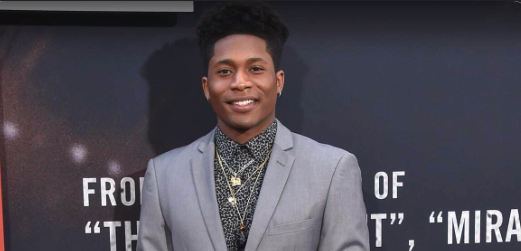
Da’Vinchi built his name playing Black American characters. Audiences know him as Terry “Southwest T” Flenory on Starz’s BMF and as Darnell Hayes on All American, and he is joining NBC’s Chicago Fire for its fifteenth season. That body of work is a large part of why a conversation he had on Cam Newton’s Funky Friday podcast has followed him for more than a week.
In the interview, the Brooklyn-born actor, who was raised in a Haitian household, talked about why overseas actors are often cast in American roles and questioned the work ethic of Americans. He agreed with Newton that some Black people from the Caribbean, Africa and the United Kingdom look down on Black Americans, and he argued that the way history is being viewed is holding people back. Within days, an advocacy group had added him to a boycott list, Charlamagne Tha God had named him “Donkey of the Day” on The Breakfast Club, and outlets were reporting that his social media following was shrinking.
The headlines have been blunt. AllHipHop summed up the controversy as “Lazy & Slavery.” Baller Alert and The Breakfast Club both framed his position as saying it is time to “move on” from slavery. But the quotes those same outlets published tell a story with more than one layer. Some of what Da’Vinchi has been criticized for, he said in so many words. Some of it was a premise supplied by the host. And some of the strongest language attached to his name does not appear in any of his published quotes reviewed for this story.
None of that makes the backlash a misunderstanding. The objections Black Americans raised are about the substance of his argument, and on the history those objections carry real weight.
What He Said About Casting and Work Ethic
Part of the discussion was about Hollywood. According to Complex, Da’Vinchi told Newton that some casting decisions had puzzled him, especially on a role he felt connected to, and that he had learned to see the industry in commercial terms. “This is the entertainment business, not the entertainment arts,” he said. He suggested that a British performer might cost less, and that producers might reason an overseas actor would be “more focused” and “less worried about being a celebrity or influencer.”
The subject was not abstract for Da’Vinchi. Newton pointed to British stars Daniel Ezra and Damson Idris, Complex reported, and Da’Vinchi worked alongside Ezra on All American.
The conversation also moved from actors to Americans in general. Da’Vinchi said people in higher positions find it hard to trust the American work ethic, a remark outlets have transcribed in slightly different words. He said people are becoming “more incompetent,” that America babies its kids, and that he could take care of himself fully by about age eight. Speaking of Americans, he added, “you’re just incompetent for a really long time,” according to Baller Alert and EURweb.
Whether Da’Vinchi himself called Americans lazy is less clear from the coverage. EURweb reported that Newton asked whether Americans were lazy and that Da’Vinchi answered, “I think this country promotes that.” TheGrio’s account has him describing a perception that Americans are lazy. Either way, Newton did not simply go along. He argued that the country’s real fixation is efficiency. “What America’s premise is, is efficiency,” he said, according to iHeart.
In the quotes that have been published, those remarks were aimed at Americans as a whole. TheGrio reported that Black Americans were later included in that discussion, and that is where much of the backlash has focused.
The Exchange About Black Americans
The moment at the center of much of the coverage was set up by a statement from Newton. “There’s a stigma those in the Caribbean, Africa, or the UK think that they are better than Black Americans,” the host said, according to both iHeart and Baller Alert.
Da’Vinchi’s reply came in two parts. “I think that’s true,” he said, before adding, “I don’t think it’s right.”
The second sentence matters. Read in full, he agreed that the attitude exists and said he does not approve of it. AllHipHop’s Houston Williams made a similar observation, writing that Da’Vinchi may have been describing an uncomfortable reality without endorsing it, while warning that the remarks could still be heard as a “dog whistle.”
What gave the answer its edge was the explanation that came with it. According to theGrio, Da’Vinchi pointed to Caribbean nations, including Haiti, where enslaved people overthrew slavery before Black Americans were emancipated, and said he understood why the attitude exists even though he did not endorse it. Explaining a prejudice by pointing to history can sound close to justifying it.
The Slavery Remarks, and a Phrase Nobody Has Quoted
The comments about slavery are where the gap between the headlines and the published quotes is widest.
Baller Alert’s account has Da’Vinchi saying he understands the emotions the subject brings up because of what people of African descent have gone through, but that the story is much bigger. He also said that white people have enslaved white people and Black people have enslaved Black people, a line outlets have transcribed in different words. And there is the sentence that both Baller Alert and theGrio quote the same way: “We’re looking at history from a point of view that is cutting our legs off.”
Baller Alert’s headline says he declared it is time to “move on” from slavery, and The Breakfast Club used similar words in the title of its segment. But none of the published quotes reviewed for this story shows Da’Vinchi using that phrase. The closest wording in Baller Alert’s own article is a reference to being able to “move forward.”
That distinction should not be overstated. The full episode may contain language the write-ups left out, and the argument he did make is close enough to “move on” that at least two outlets summarized it that way. But a paraphrase is not a quote, and it should not be presented as one.
How the Backlash Unfolded
Baller Alert dates Da’Vinchi’s Funky Friday appearance to October 2. By Sunday, October 4, Freedmen Nation, which Baller Alert describes as an advocacy group for Black Americans descended from people enslaved in the United States, had added him to its boycott list, objecting to generalizations that diminish its community’s talent and effort. The next day, Charlamagne Tha God gave him “Donkey of the Day” on The Breakfast Club.
Other criticism came from individuals. iHeart’s roundup included comedian Del Amo Manny, who argued that nobody lazy or incompetent could have survived chattel slavery, Jim Crow, segregation or the crack epidemic. It also cited a social media user who questioned the wisdom of a Black immigrant, or the child of immigrants, benefiting from Black Americans and then criticizing them on television.
A more personal accusation came from Brandon Barry Brown, an actor who identified himself as a former friend. In a video cited by iHeart and Black America Web, Brown called Da’Vinchi “very anti-Black.” That is one man’s characterization, and Baller Alert reported that Da’Vinchi had not responded to Brown’s claims.
Reports on the cost to his following do not agree. EURweb, citing AllHipHop, reported that his Instagram following fell from 2.1 million to roughly 1.9 million, and noted that AllHipHop itself acknowledged the numbers are hard to verify. Black America Web put the drop at about 3 million to roughly half that. Both cannot be right, and neither figure has been independently confirmed.
Da’Vinchi’s own response has been limited. Replying on Threads to a woman who objected, he wrote, “I’m sorry you felt like it was you. It was a generalized statement. I should’ve been more specific,” according to EURweb and Black America Web. Black America Web reported that he later used Tupac’s “Hit ‘Em Up” trend to address the controversy. AllHipHop’s Williams separately criticized a recent post of his that invoked 2Pac. In the coverage reviewed for this story, which runs through October 9, he had not issued a fuller statement or apology.
The History Behind the Pushback
TheGrio’s Kay Wicker laid out the historical objection in detail. The idea that Black people are lazy, she wrote, has its roots in slavery itself, when Black people did the hardest labor while being labeled lazy and incapable. The stereotype turned exploitation into supposed evidence of a defect.
The comparison with Haiti deserves the same care. The Haitian Revolution ran from 1791 to 1804, and Haiti became, in Britannica’s words, “the first country to be founded by former slaves.” In the United States, the 13th Amendment abolishing slavery was not ratified until December 6, 1865, according to the National Archives. That is a gap of about six decades, and Haitians have every reason to be proud of it.
But the gap does not mean Black Americans accepted bondage. TheGrio pointed to Gabriel Prosser’s planned rebellion in Virginia in 1800, the German Coast uprising of 1811, in which hundreds of enslaved people marched toward New Orleans, the uprising Denmark Vesey was accused of organizing in Charleston in 1822, and Nat Turner’s revolt in Virginia in 1831. Resistance was violently suppressed, and after Turner’s revolt Southern legislatures further restricted Black movement, assembly and education. Nearly 180,000 Black men later served in the Union Army.
Wicker’s argument is that the two histories unfolded under very different geographic, demographic, military and political conditions, and that Haiti’s success does not show Black Americans were any less determined to be free.
A Complicated Messenger
Part of what gives the episode its sting is who delivered the message. Da’Vinchi was born Abraham D. Juste in Brooklyn. He told Newton he was born in the United States to parents who were not from here and was raised by a grandmother who did not speak English, so that home felt like Haiti while the world outside was America, according to theGrio and Complex.
His career, though, has been built on Black American stories. Complex describes his role as Terry “Southwest T” Flenory on BMF as his big break, and he appeared before that on Grown-ish and All American. One critic cited by iHeart captured the tension, writing that Da’Vinchi wants to be American enough to critique but foreign enough to separate himself from the stigma.
He has not always spoken this way. AllHipHop’s Williams noted that Da’Vinchi has previously talked about the trauma Black Americans experience and described them as extraordinarily influential, and that, having been born here, he is part of the “we” he was talking about.
The controversy also arrives as his career is changing. Complex reported that he is joining NBC’s Chicago Fire for Season 15 as firefighter candidate Marcus Burke.
THE ROTATION
Two things can be true about this story. Da’Vinchi has been credited with words nobody has shown him saying, and what he did say was enough to earn the criticism. Fairness means holding on to both.
Start with what he got right. The stigma Newton described is one Da’Vinchi said he recognizes, and he said plainly that he does not think it is right. If the conversation had stayed there, it could have been a useful one. Tension inside the diaspora is rarely discussed in public by people with a platform, and it does not go away by being ignored.
The trouble is the reasoning he wrapped around it. A broad statement about a nation’s work ethic does not stay broad when the speaker is a Black actor whose fame comes from portraying Black Americans. It lands on a group that was called lazy by the same system that was taking its labor. Whatever he intended, he repeated an old charge to an audience that knows exactly where it comes from.
The Haiti comparison has the same weakness. The Haitian Revolution is one of the great achievements in the history of Black freedom. But pride in Haiti does not require a shortcoming in anyone else. A victory loses some of its dignity when it is used as a measuring stick against people who fought the same institution under different conditions and paid for every attempt.
Then there is the idea that looking at history a certain way cuts people’s legs off. There is a reasonable version of that thought. No community should be defined only by what was done to it. But history is not just a wound people choose to keep open. It is the explanation for conditions that still exist, and it is hard to move forward from something whose effects are still being argued over.
Da’Vinchi’s own reply contains the most practical lesson in the whole episode: “I should’ve been more specific.” Specific criticism can be argued with. A person can debate how children are raised, what convenience does to competence, or how Hollywood decides who gets cast. A generalization about a people can only be resented, because nobody in the group can prove they are the exception.
The audience has a responsibility here too. Putting quotation marks around a phrase he has not been shown saying makes the debate less accurate, and it hands him an easy defense. He should be held to his actual words. In this case they are enough.
Nobody wins an argument about which part of the diaspora is better. The history his critics cited, from Haiti to Virginia to the Union Army, is a single story about people refusing to stay in bondage. It was never a ranking.
LET’S TALK ABOUT IT
Was Da’Vinchi describing an uncomfortable reality inside the diaspora, or did his explanations cross the line into endorsing it?
And here’s another question worth considering: When an actor builds a career portraying Black American characters, does that create a special responsibility in how he speaks about Black Americans?
However those questions are answered, the conversation he started is bigger than one podcast appearance, and it deserves to be had with the actual quotes on the table.