Finesse2Tymes Says It Could Cost Nearly $1 Million to Leave Mob Ties!

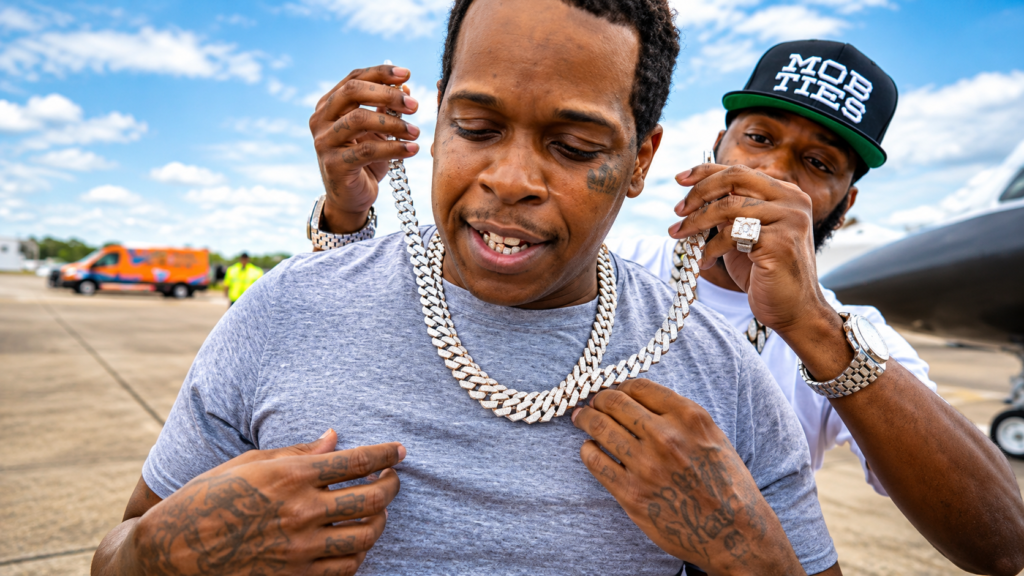
Everybody loves talking about getting signed.
Nobody talks enough about what happens when you want to get unsigned.
That’s the conversation surrounding Finesse2Tymes right now.
The Memphis rapper has been publicly trying to separate himself from J. Prince Jr.’s Mob Ties for months, and now he’s making an explosive claim about what he says it will take to finally walk away.
According to Finesse2Tymes, J. Prince Jr. wants nearly $1 million—plus royalties—in exchange for releasing him from his recording agreement.
That’s Finesse’s allegation.
The reported buyout terms haven’t been independently verified or publicly documented, and we haven’t seen enough authenticated contractual material to determine exactly what either side is legally entitled to.
But even without deciding who’s right in this particular dispute, the situation raises a much bigger question that hip-hop has been dealing with for decades:
Why do so many artists understand how valuable their contract is to somebody else only when they try to leave it?
Finesse Has Been Saying He Wants Out
This didn’t start yesterday.
At the beginning of 2026, Finesse publicly asked J. Prince Jr. to release him from Mob Ties.
And what was interesting at the time was that he wasn’t initially presenting the situation like some all-out personal war.
He basically said the business relationship had run its course.
He maintained that he still had love for people connected to Mob Ties but didn’t want to continue doing business under the same arrangement.
His argument was straightforward:
I’ve been here for years. I don’t believe I’ve made the money I should have made. I want the opportunity to go somewhere else and build the next phase of my career.
That’s where the problem begins.
Because wanting out of a record contract and actually having the legal ability to leave one are two completely different things.
A Record Deal Isn’t a Job You Can Just Quit
This is where fans sometimes misunderstand the music business.
If you hate your regular job, generally speaking, you can quit.
Maybe that’s financially painful.
Maybe it’s inconvenient.
But your employer usually can’t tell you:
“You still owe us three albums.”
Recording agreements can work very differently.
An artist may have obligations involving albums, options, advances, recording costs, marketing expenses or other contractual commitments.
And depending on the agreement, leaving early can become expensive.
Very expensive.
That’s why the headline about Finesse allegedly needing almost $1 million to get out catches people’s attention.
But the dollar amount isn’t actually the most educational part.
The real question is:
What exactly did everybody agree to when the relationship was good?
That’s the Part Nobody Likes Reading
Artists don’t become rappers because they love contract law.
They want to make music.
Then success starts happening.
Somebody believes in you.
Money appears.
Jewelry appears.
Flights.
Studios.
Videos.
Advances.
Cars.
Hotel rooms.
Marketing.
Everybody’s celebrating.
It feels like you’re finally winning.
But here’s where the music business can become confusing.
Some of that money may not necessarily be a gift.
It can be an investment.
And investments are usually expected to produce returns.
That’s where recoupment comes into the conversation.
In simple terms, recoupment means certain money spent on an artist can potentially be recovered from revenue before the artist begins receiving particular royalties, depending on the contract.
So when an artist says:
“The label spent all this money on me,”
the next question should sometimes be:
Whose money was it really?
Because depending on the agreement, some of that money may ultimately be coming out of the artist’s side of the equation.
Then Finesse Started Talking About the 360 Deal
Earlier this year, Finesse publicly examined what he described as his recording agreement and became increasingly angry about the structure.
He said he discovered he was operating under a 360-style arrangement.
A 360 deal basically means the company may participate in more than just recorded music revenue.
Depending on the actual contract, that could potentially include areas such as touring, merchandise, endorsements, publishing-related income or other revenue connected to the artist.
Not every 360 agreement is identical.
And a 360 deal isn’t automatically proof somebody got robbed.
That’s important.
The actual percentages, services, investment, obligations, ownership provisions and accounting terms matter.
But here’s the basic concept:
The company is betting on the entire artist—not simply the album.
So if the artist becomes successful in multiple areas, the company can potentially participate in multiple areas.
And that’s exactly why understanding the paperwork before signing becomes so important.
Finesse Says Loyalty Played a Role
This is where the story becomes bigger than contract terminology.
Finesse has repeatedly talked about loyalty.
That’s one of the most complicated words in the music business.
Because hip-hop relationships often begin personally.
Somebody believes in you.
Somebody helps you when nobody else will.
Somebody introduces you to people.
Somebody puts money behind you.
Somebody gives you an opportunity.
Now you’re not just negotiating with a corporation.
You’re negotiating with somebody you consider family.
That’s when artists sometimes become uncomfortable asking difficult questions.
“Why do I need my own attorney?”
“Don’t you trust us?”
“We’re family.”
“We’ll figure all that out later.”
Maybe everybody genuinely loves each other at that moment.
But contracts aren’t written for the moment when everybody loves each other.
Contracts matter most when everybody stops agreeing.
That’s when the paper comes out.
Never Confuse Friendship With Legal Representation
This might be the biggest lesson in the entire situation.
You can trust somebody personally and still have your own lawyer.
Those things aren’t contradictory.
In fact, if everybody believes the deal is fair, independent legal representation shouldn’t threaten anybody.
The artist’s lawyer isn’t necessarily there to destroy the deal.
They’re there to explain it.
What do you own?
What does the label own?
How long does the agreement last?
How many projects do you owe?
Who controls the masters?
What happens if you want to leave?
What expenses are recoupable?
What percentage does everybody receive?
Can the agreement be transferred?
What happens if the label doesn’t release your music?
Those questions aren’t disrespectful.
They’re business.
And Finesse Learned That Lesson in a Very Modern Way
One of the strangest parts of this entire story happened earlier this year when Finesse publicly said he used ChatGPT to help understand his contract after also having attorneys examine the paperwork.
The episode went viral because he said the analysis made him believe the arrangement was heavily one-sided.
That became almost comedic online.
A rapper had to put his record contract into AI to figure out what he’d signed.
But underneath the jokes was actually a serious lesson.
Artists sign documents that can potentially control years of their careers.
Sometimes they understand every provision.
Sometimes they don’t.
And sometimes they don’t start asking the hardest questions until the relationship deteriorates.
AI shouldn’t replace a qualified entertainment attorney reviewing an actual agreement.
But the fact that Finesse felt he needed additional help understanding his own deal tells you something about how complicated these agreements can become.
The Nearly $1 Million Claim Changes the Temperature
Now we’ve reached the latest chapter.
Finesse claims J. Prince Jr. wants nearly $1 million and royalties as part of releasing him.
Again, that hasn’t been independently established.
We don’t know from the public reporting exactly how that alleged figure was calculated.
Was it connected to advances?
Unrecouped expenses?
Remaining contractual obligations?
The perceived value of future recordings?
A negotiated buyout?
Something else entirely?
Those details matter.
Because without seeing the actual proposal and the underlying agreement, nobody outside the negotiations can responsibly determine whether that amount is contractually justified.
But the dispute itself illustrates something important.
An artist’s freedom can have monetary value.
If a company believes it has contractual rights to future revenue from an artist, releasing that artist may mean surrendering something the company considers valuable.
That’s why “just let him go” can be much more complicated legally than it sounds emotionally.
But There’s Another Question: What Is an Unhappy Artist Worth?
This is where the business gets strange.
Let’s say an artist doesn’t want to record for you anymore.
They’re publicly criticizing the company.
The relationship is damaged.
Fans know about the dispute.
The artist wants to leave.
At what point does keeping that person under contract stop being valuable?
That’s a legitimate business question.
Because a recording agreement might give you rights.
It can’t necessarily give you enthusiasm.
You can potentially obligate somebody to deliver music.
You can’t contractually manufacture chemistry, motivation or trust.
And once the relationship becomes publicly hostile, everybody’s brand starts taking damage.
Hip-Hop Has Seen Versions of This Story Forever
This isn’t new.
Artists complaining about contracts is practically part of hip-hop history.
Masters.
Publishing.
Advances.
Recoupment.
Bad management.
Accounting disputes.
Unreleased albums.
Label freezes.
Contract buyouts.
We’ve heard different versions for decades.
What’s changed is that artists can now explain the dispute directly to millions of people.
They don’t need a magazine interview.
They go live.
Post the paperwork.
Record a video.
Upload screenshots.
Call names.
And suddenly a private contract dispute becomes public entertainment.
That gives artists leverage.
But it also creates another problem.
The internet sees pieces of a complicated agreement and immediately chooses a side.
Contracts don’t work well in 30-second clips.
The Real Lesson Is Bigger Than Finesse2Tymes and J. Prince Jr.
Maybe Finesse signed a deal he now regrets.
Maybe Mob Ties believes it invested money and resources and is entitled to whatever the contract provides.
Maybe both sides genuinely believe they’re being treated unfairly.
Those questions ultimately depend on the agreement, accounting and negotiations—not Instagram comments.
But younger artists should pay attention anyway.
Because the lesson is incredibly simple:
The best time to understand how you can leave a contract is before you sign it.
Don’t wait until the relationship falls apart.
Don’t wait until the hit record comes.
Don’t wait until money starts disappearing.
Don’t wait until somebody tells you that getting your freedom back has a price tag attached.
Before signing, ask the uncomfortable questions.
Get your own attorney.
Understand the masters.
Understand the percentages.
Understand recoupment.
Understand the options.
Understand the exit provisions.
And most importantly:
Understand what happens if everybody in the room stops being friends.
Reality Check
Hip-hop loves the signing ceremony.
The chains.
The champagne.
The Instagram announcement.
The label executive standing next to the new artist.
Everybody smiling.
Nobody posts the termination clause.
That’s the part young artists need to start caring about.
Because getting signed can change your life.
But signing something you don’t completely understand can change your life too.
Finesse2Tymes and J. Prince Jr. may eventually negotiate their way out of this.
Maybe lawyers settle it.
Maybe somebody pays somebody.
Maybe the relationship gets repaired.
Maybe it gets worse.
We don’t know yet.
But whatever happens, this dispute should be studied by independent artists.
Not because we know who is right.
We don’t have enough verified contractual information to say that.
Study it because it demonstrates something hip-hop keeps learning the hard way:
Loyalty is an emotion. A contract is an obligation.
And when the relationship falls apart, the court isn’t going to ask how much everybody loved each other when the deal was signed.
They’re going to read the paperwork.
Hip Hop Rotation Question
Should record labels make it easier for unhappy artists to buy their freedom—or if a company invested money and helped build the career, should the artist be required to fulfill the deal they signed?