Questlove Connects AI to Sampling — And Hip-Hop Has Seen This Fight Before

Hip-hop has heard this argument before.
A new technology expands what creators can make. Artists move faster than the rules. Then ownership, permission and payment enter the room.
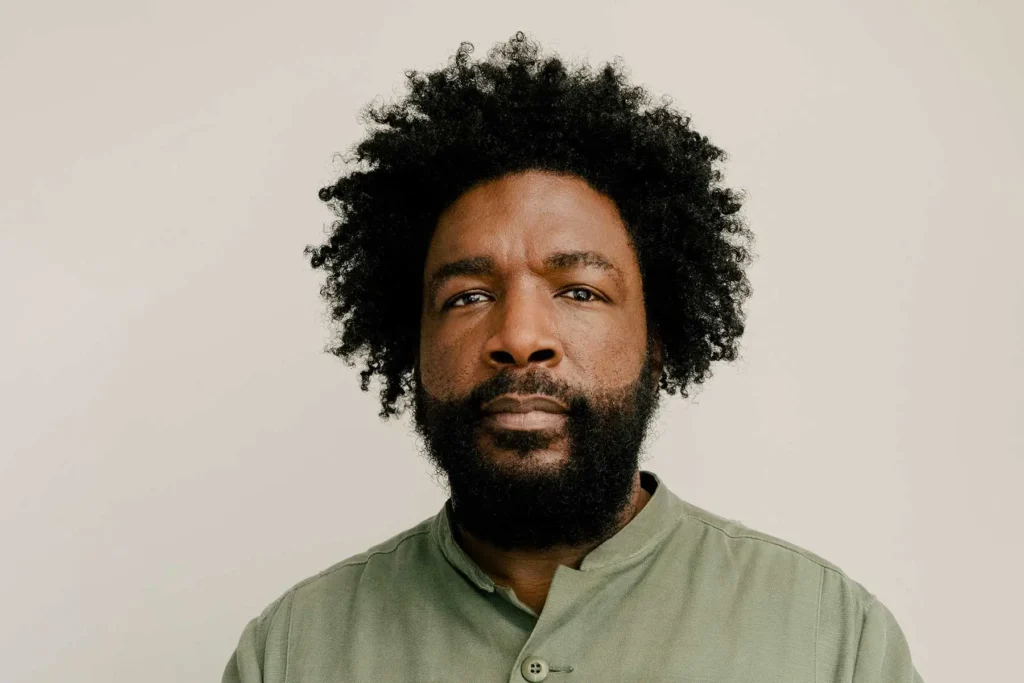
Questlove sees artificial intelligence as “a parallel to sampling culture,” according to his September 30 appearance on Billboard On the Record. His comparison places today’s AI debate inside a history hip-hop already knows: innovation can open creative doors while creating business problems nobody solved before the music started moving.
But Questlove is making a cultural and technological comparison—not claiming that AI generation and conventional sampling are legally identical.
That distinction matters.
Sampling takes recorded material and places it inside a new work. AI can be used for several different purposes, from locating sounds to generating performances or imitating voices. The methods, rights and risks are not automatically the same.
The shared tension is simpler:
What happens when technology makes transformation easier than permission?
Speaking with Billboard senior correspondent Kristin Robinson, Questlove discussed AI-assisted sample discovery, copyright and possible ways to improve compensation for creators. He also described a record as a captured performance created by a community of musicians.
That idea changes how the source material should be viewed.
A recording is not just data sitting in a catalog. It may contain the work of performers, writers, producers and other contributors whose human collaboration made the record worth revisiting. Technology can help a new creator find that work, but discovery does not erase the people behind it.
Questlove told Billboard that Public Enemy’s June 1988 album It Takes a Nation of Millions to Hold Us Back was an “eureka moment” for him. The album changed how he heard his father’s record collection, making older music feel alive in a new context.
That is sampling at its most powerful.
It can introduce listeners to sounds they never knew, reconnect generations and turn a record from another era into part of a new cultural conversation. Questlove’s 2026 documentary about Earth, Wind & Fire, which HBO says he directed and produced, also examines how an older catalog can continue influencing later artists through sampling.
Still, creative possibility is only half of the story.
Questlove also discussed the 1991 Biz Markie sampling case as a turning point that made sample-based production more complicated and expensive. The federal court record in Grand Upright Music Ltd. v. Warner Bros. Records shows that a judge granted a preliminary injunction involving Biz Markie’s unauthorized use of “Alone Again (Naturally).”
That ruling addressed one specific uncleared sample. It did not declare every possible act of sampling illegal.
Its practical importance was bigger than that narrow point, however. As licensing became increasingly important, producers had to think about clearance, cost and ownership alongside drums, loops and arrangements.
The art survived.
The price of participating changed.
That history is why Questlove’s AI comparison lands. Sampling shows that regulation does not have to destroy innovation, but the structure of access can determine who gets to keep innovating.
A major company may have the money and legal support to license valuable recordings. An independent producer may not. If AI licensing develops into another expensive, complicated gate, the technology may remain available while meaningful access becomes concentrated among creators with larger budgets.
At the same time, musicians and rights holders have a legitimate interest in controlling how their work generates value. If commercial AI systems use recorded music, voices or performances, questions about permission and compensation do not disappear because the technology is impressive.
Catalog owners may also see opportunity.
Questlove told Billboard that some owners now actively look for ways to return older recordings to contemporary culture. He said at least one company had invited creators to work with its catalog.
That approach treats reuse as discovery and business instead of automatically treating it as a threat. But it still raises questions about terms: who can participate, what permission costs, which contributors get paid and how revenue is divided.
The policy side remains unsettled too.
In July 2024, the U.S. Copyright Office reported that generative AI had exposed gaps in protections against unauthorized digital replicas of people’s voices and appearances. That report adds important context, but it does not establish that AI generation and traditional sampling are legally equivalent—or that every dispute involving AI training, licensing and compensation has been resolved.
Far from it.
Questlove’s interview does not answer every question his comparison creates. It remains unclear which uses of AI he views as constructive creative assistance and which he would consider exploitation. His comments also do not establish whether the parallel extends from AI-assisted sample discovery to models trained on copyrighted recordings.
Those lines still need to be drawn.
Should AI companies license music before using it as training material? How should performers, producers, writers and rights holders divide payment? Can the industry create a standardized system that compensates people without making lawful access unaffordable for independent creators?
Sampling’s history offers a warning and a possibility.
Hip-hop proved that transforming existing sound could produce original culture. The business eventually built rules around that creativity, but those rules also influenced which records could be cleared and which producers could afford to use them.
AI may follow a similar path.
The tool can widen the creative field. The payment system may narrow it again.
REALITY CHECK: A Powerful Tool Can Become an Expensive Problem
New technology often makes something possible before people fully understand the rights attached to using it.
That creates an advantage for early adopters. It can also create future exposure if the tool depends on material someone else owns or work somebody else performed.
You do not have to be producing an album or building an AI company to face that issue. Images, beats, videos, writing and business ideas can all move faster than the agreements surrounding them.
Being first may bring attention. It does not automatically bring permission.
That does not mean creators should avoid new tools. It means the long game requires understanding what can be used, what needs approval and who should be compensated when experimentation becomes commerce.
Innovation creates the opportunity. Rights determine whether it becomes an asset or a liability.
LET’S TALK ABOUT IT
Is AI the next evolution of hip-hop’s tradition of transforming existing sound, or does training a model on creative work cross a fundamentally different line?
If licensing becomes the standard, how can creators be paid fairly without pricing independent producers out of the future?
Drop your perspective below—because the next creative revolution will still need a business model.