KRS-One’s Unpublished Memoir Exposes a Gap in Hip-Hop’s History

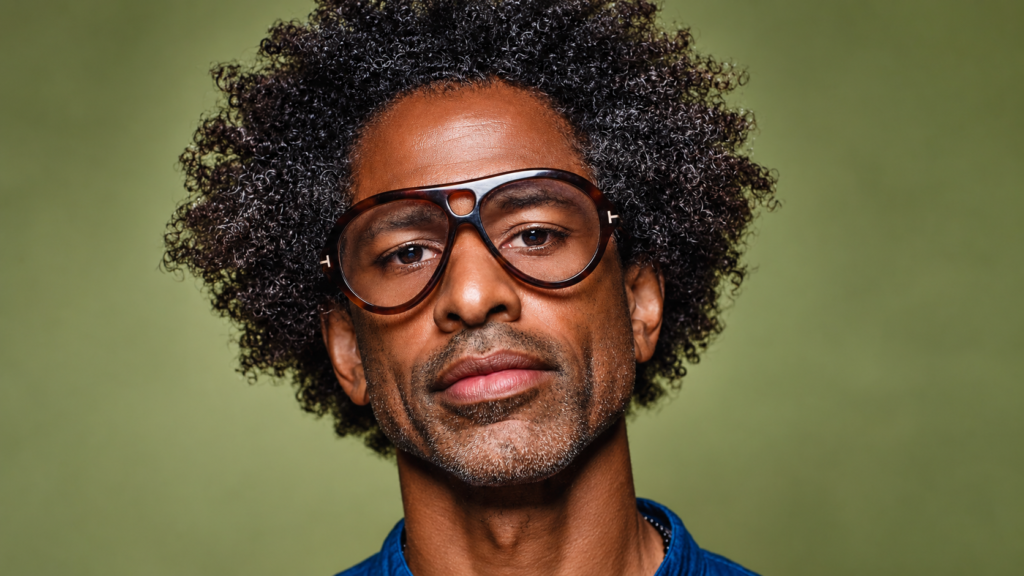
Touré says he spent two years helping document KRS-One’s life.
The book still hasn’t arrived.
On September 28, Touré uploaded a video titled “I Wrote KRS-One’s Unbelievable Memoir (It’s Not Coming Out),” revisiting material from an unpublished project reportedly titled Invincible Man.
The story inside it is powerful: teenage homelessness, public-library education, meditation, the birth of the KRS-One name and a shelter connection that helped produce Boogie Down Productions.
But this wasn’t a new KRS-One interview.
Touré had already shared central parts of the story through theGrio in August 2023 and his Culture Fries Substack in September 2024. The 2026 video brings that material back into the conversation, but the reported memoir itself remains unavailable.
That makes the unfinished book more than a missing release. It makes it a missing piece of hip-hop’s historical record.
According to Touré, KRS-One—born Lawrence Parker and then known as Larry—left home at 16 after an argument with his mother. Touré said the teenager slept outside, searched for discarded food and spent long stretches reading inside a Brooklyn public library.
The reading wasn’t casual.
Touré’s accounts describe Parker studying science, physics, religion, mythology, philosophy, law, Black history and other subjects while experiencing homelessness.
Touré also said Parker practiced meditation and repeated affirmations about becoming a successful MC, poet and intellectual.
That part of the story matters because it would be easy to package KRS-One’s homelessness as a dramatic origin myth.
It shouldn’t be romanticized.
Homelessness didn’t magically create his talent. According to Touré’s telling, Parker was surviving a dangerous situation while deliberately educating himself, developing his identity and imagining a different future.
The hardship is part of the story. The choices he made inside that hardship are the deeper story.
Touré also traced the evolution of the KRS-One name.
According to his account, shelter residents connected Parker with “Krishna” after he helped Hare Krishna members distribute materials in exchange for food. “Krishna” reportedly became “Kris,” which then developed into the graffiti name KRS-One.
Touré said “Knowledge Reigns Supreme Over Nearly Everyone” was attached to the name later as a backronym—a phrase created to fit letters that already existed.
The path from the shelter system to hip-hop history has broader firsthand support.
KRS-One told I Am Hip-Hop Magazine that he met social worker and DJ Scott La Rock at a homeless shelter around 1985. An archival Interview profile also places their meeting inside a Bronx men’s shelter.
That partnership became Boogie Down Productions.
According to AllMusic’s career history, the group released Criminal Minded in 1987, an album that became foundational to KRS-One’s career and hip-hop’s recorded history.
Those sources support the broad outline.
They do not independently confirm every detail Touré has shared from the unpublished memoir interviews.
And one detail shows why that distinction matters.
Touré’s September 2024 Substack account says KRS-One had a vision of himself crossing into a new life before walking across the Williamsburg Bridge and encountering a line that led him into the shelter system.
Touré’s 2023 theGrio account identified the bridge as the Brooklyn Bridge. AllHipHop’s 2026 coverage also used the Brooklyn Bridge.
The available material doesn’t resolve which one is correct.
That may sound like a small difference inside a much bigger life story. But details become important when a story is presented as history—especially when the full source material isn’t available for readers, editors or researchers to compare.
One conflicting bridge doesn’t erase the journey. It shows why the journey needs a definitive record.
A completed memoir could place KRS-One’s experiences, ideas and recollections inside one sustained narrative. It could clarify the timeline, preserve his voice and show how the different pieces connect.
Scattered excerpts do something else.
They preserve fragments.
A 2023 article contains one version.
A 2024 post adds more detail.
A 2026 video reintroduces the project.
Meanwhile, the interviews, possible drafts and supporting material remain outside public reach.
There is no confirmed public dispute between KRS-One and Touré. KRS-One had not publicly responded to the September 2026 video by the research cutoff, and no public explanation establishes why the book was never completed or released.
It is also unclear whether KRS-One approved a finished manuscript, whether Invincible Man was an approved title or which passages came directly from recorded interviews rather than Touré’s reconstruction during the writing process.
Those are not invitations to speculate.
They are reminders of what the public record still lacks.
Hip-hop has already lost stories to time, damaged archives, private collections, unclear ownership and the deaths of people who never got to tell their full version. An interview can capture a memory, but capture is not the same as preservation.
Files can disappear.
Formats can become obsolete.
Participants can disagree.
Context can be separated from the quote.
History doesn’t become secure simply because somebody once pressed record.
For KRS-One, the questions involve accuracy, authorship and control over how his life is presented.
For the culture, the question is larger: how much firsthand history is currently sitting inside private drives, unfinished manuscripts and recordings that nobody has organized for the next generation?
Touré’s accounts are public.
The memoir is not.
REALITY CHECK: Valuable Work Can Still Vanish
Here’s the lesson beyond hip-hop.
Starting important work is not the same as preserving it.
You can record family stories, outline a business, draft a book, film a documentary or collect years of research. If the material stays scattered, unfinished and inaccessible, its value may never reach the people who need it.
That doesn’t mean every private file must become public. Artists and interview subjects should have a voice in how personal material is used, and unfinished work may contain errors, sensitive details or ideas that were never approved for release.
But protection requires a plan.
Clear ownership.
Organized files.
Reliable backups.
Documented permissions.
A realistic path toward completion or preservation.
Because memory gets weaker, technology changes and unfinished projects don’t explain themselves.
A story can be priceless and still disappear if nobody finishes it, protects it and makes it usable.
LET’S TALK ABOUT IT
When an unfinished memoir contains important hip-hop history, should the interviews be preserved or released in some form—or should they remain private unless the full book is approved?
Who should have the final say over that historical record: the artist whose life was documented, the writer who conducted the interviews, or both together?
Add your perspective below—because preserving the culture also means deciding who controls its memory.