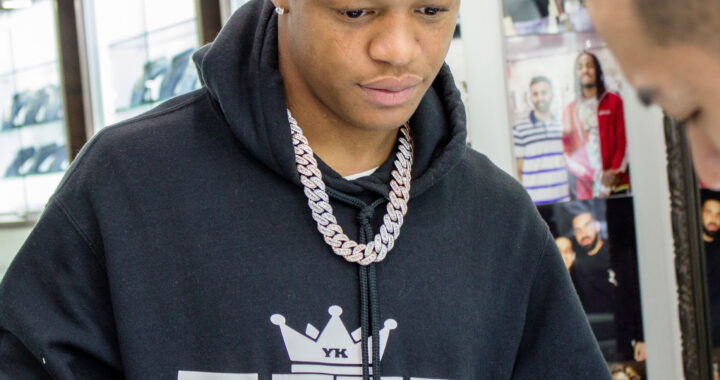
Young Thug’s Netflix Documentary Could Reopen the Debate Over Rap Lyrics in Court


The Young Thug trial may be over.
The argument it created is not.
Fulton County Judge Paige Reese Whitaker says Netflix and Passion Pictures are producing a documentary about the YSL trial, one of the longest and most consequential criminal cases hip-hop has seen in years. During an interview published October 13, Whitaker said she participated in the project and expects it to air in 2027.
According to XXL, Whitaker also said an exclusivity agreement prevents her from revealing additional details before the documentary arrives.
But there is an important distinction here: Netflix has not publicly announced the project or confirmed its release date. A reported title, Young Thug on Trial, along with a 90-minute runtime and production credits circulating through music reports, also remains unconfirmed by Netflix or Passion Pictures.
So the documentary news is developing.
The debate behind it has already been years in the making.
Young Thug, whose legal name is Jeffery Williams, was arrested and originally indicted in May 2022. According to the Associated Press, a superseding indictment accused Williams and 27 other people of conspiring to violate Georgia’s Racketeer Influenced and Corrupt Organizations Act, better known as RICO.
Prosecutors alleged that YSL was a criminal street gang associated with the Bloods. Williams’ defense challenged that interpretation, connecting YSL to Young Stoner Life and arguing that prosecutors risked misrepresenting lyrics, social-media posts and hip-hop imagery by removing them from their creative context.
That distinction became one of the case’s biggest cultural questions.
When does a lyric become evidence?
A rapper can build a character, exaggerate a threat, describe an environment or turn street language into entertainment. None of that automatically means every line is fictional. It also does not mean every bar should be treated like a sworn confession.
Context and corroboration matter.
Prosecutors may argue that a lyric becomes relevant when it connects to other evidence, specific people or alleged events. Defense attorneys may respond that music is designed to be dramatic and that selectively presenting lyrics can make artistic expression sound more literal than it was ever intended to be.
The YSL prosecution placed that tension directly in front of the public.
On October 31, 2024, Williams pleaded guilty to one gang charge, three drug charges and two gun charges. The Associated Press reported that he also entered no-contest pleas to racketeering conspiracy and another gang charge through a non-negotiated “blind” plea, meaning prosecutors and the defense had not reached a sentencing agreement.
Judge Whitaker imposed a 40-year sentence structured around time served, 15 years of probation and another 20 years that can be commuted if Williams successfully completes probation, according to the Associated Press.
Those pleas are part of the record. They still do not prove every allegation prosecutors made about YSL or every defendant connected to the case.
The final verdicts made that especially clear.
According to the Associated Press, Deamonte “Yak Gotti” Kendrick was acquitted on every count when the remaining trial concluded in December 2024. Shannon Stillwell was acquitted of the racketeering, murder and gang charges while being convicted of possessing a firearm as a convicted felon.
That is why the documentary’s framing will matter.
A film can reach millions of people who never watched the courtroom proceedings or studied the differences between an allegation, a plea, a conviction and an acquittal. For many viewers, the documentary may become the version of the YSL case they remember.
If it centers the prosecution’s narrative, it could reinforce the idea that the lyrics and imagery helped reveal an alleged criminal organization. If it focuses on the defense’s concerns, it could become a warning about using rap language to transform creative identity into evidence of criminal intent.
Either approach could affect how the public views Young Thug’s reputation, business relationships and artistic legacy.
And plenty remains unknown.
Did Young Thug sit for a new interview? Which defendants, attorneys, prosecutors, witnesses or family members participated? Will the film examine disputed lyrics in their full context? Will it carefully distinguish charges from proven outcomes? Does it include previously unseen material, or will it rely mainly on courtroom footage already available to the public?
Netflix has not publicly answered those questions.
The Source has also reported on the expected 2027 release, but until Netflix or Passion Pictures provides a formal announcement, the title, premiere date, runtime and full production team should remain labeled as unconfirmed.
That uncertainty does not make the project less important. It makes the editorial choices more important.
The YSL case was never only about one rapper’s freedom. It became a test of how courts, prosecutors, media outlets and the public interpret hip-hop when its language leaves the studio and enters a courtroom.
REALITY CHECK: Context Can Disappear
You do not have to be a rapper for your words to outlive the moment that created them.
Lyrics, captions, text messages, jokes and private conversations can be saved, forwarded and presented to an employer, a courtroom or the public without the tone and context that originally surrounded them.
That does not mean artists should stop creating honestly. It does not mean every person should speak as if a prosecutor is listening. And it certainly does not mean creative expression can never be relevant to a legitimate investigation.
It means understanding that the meaning you intended may not be the meaning somebody else assigns later.
Once words become part of a permanent record, they can affect freedom, money, employment and reputation. The speaker may remember the context. Everybody else may only see the screenshot, the caption or the isolated line.
The lyric makes the headline. The context decides the real story.
LET’S TALK ABOUT IT
Should rap lyrics be allowed in court when prosecutors believe they connect to real events, or does their use unfairly treat hip-hop storytelling like a confession?
Where should courts draw the line between relevant evidence and protected artistic expression?
Drop your take below—because that line could shape far more than one artist’s case.