
The Diddy Ruling Draws a Line Between Protected Reporting and Proven Truth

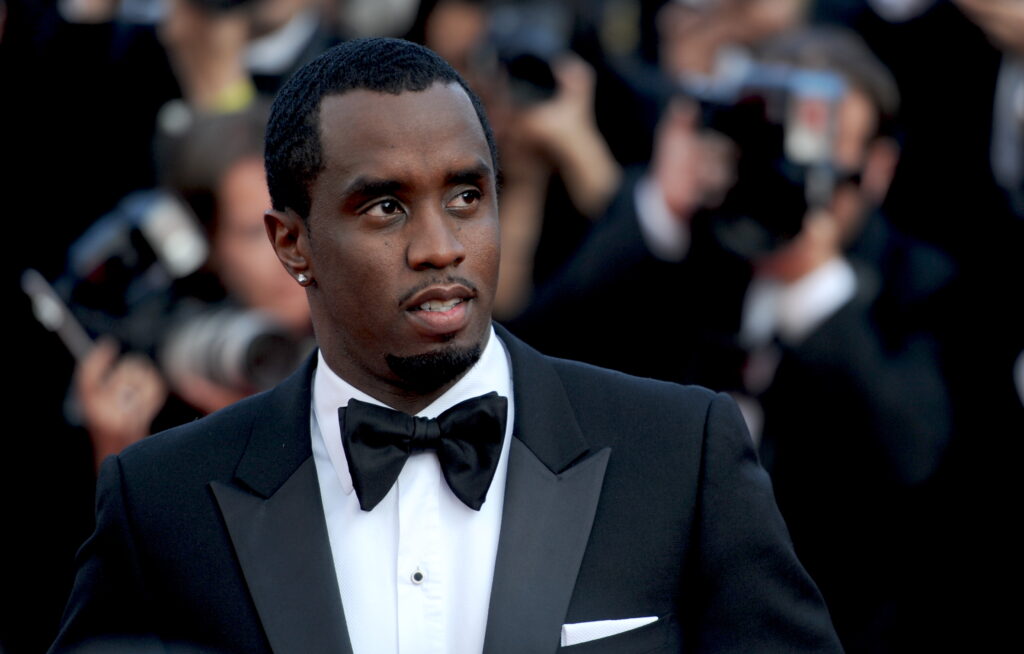
Sean “Diddy” Combs has been ordered to pay $477,700.50 in attorneys’ fees to NBCUniversal, Peacock and production company Ample.
That is the headline.
But the ruling does not mean a court confirmed every allegation presented in Diddy: The Making of a Bad Boy. It means Combs’ defamation lawsuit failed under the legal standards that applied—and New York’s anti-SLAPP law made that failure expensive.
According to an October 6, 2026, fee order from New York Supreme Court Justice Phaedra F. Perry-Bond, the three defendants are entitled to recover nearly $478,000 after securing the dismissal of Combs’ case.
The payment traces back to a lawsuit Combs filed on February 12, 2025. According to the Associated Press and court records, he sought at least $100 million, claiming the documentary defamed him through allegations involving deaths connected to his circle, secretly recorded sexual material and alleged sexual activity and trafficking involving minors.
Those were Combs’ descriptions of the documentary’s claims, and he maintained that the allegations were false.
On April 20, 2026, Justice Perry-Bond dismissed his amended complaint. The court found that Combs had not established a substantial basis for alleging that the defendants acted with gross irresponsibility, the standard at issue when evaluating the publication of matters considered to be of public concern.
The dismissal order also held that portions of the documentary drawn from court proceedings were protected under New York Civil Rights Law §74. In plain language, that law can protect fair and accurate reporting about official judicial proceedings.
That protection matters.
News organizations, filmmakers and publishers have to be able to report what appears in lawsuits, hearings and other official proceedings without automatically becoming liable simply because the underlying allegations remain disputed. Otherwise, reporting on a court filing could expose a publisher to the same risk as independently declaring every accusation to be true.
But protection is not the same thing as proof.
The April ruling did not conduct a trial over every disputed statement in the documentary. It did not issue a sweeping declaration that every person featured was truthful or that every allegation involving Combs had been conclusively established.
Instead, the court decided that his amended defamation claims could not move forward under the governing legal standards.
A protected report is not automatically a proven allegation. A dismissed claim is not automatically a factual verdict on everything being disputed.
That distinction can disappear quickly once a legal ruling hits social media. “Case dismissed” becomes “everything was true.” “Publisher wins” becomes “the documentary proved it.” Then the simplified version travels farther than the actual decision.
The money award adds another layer.
According to the October 6 fee order summarized by Diddy Docket, NBCUniversal, Peacock and Ample requested $990,292 in attorneys’ fees. Combs argued that any award should be limited to $166,769.25.
Justice Perry-Bond kept the defendants’ hourly rates in place but reduced their request by $512,591.50. The court found portions of the billing excessive, including time connected to internal meetings, dismissal motions, preparation for oral argument and the reply brief.
So the defendants won the right to recover fees, but they did not receive everything they requested.
The order also directed defense counsel to submit a proposed judgment reflecting the $477,700.50 award within 10 days of entry.
Why is Combs responsible for the other side’s legal bill at all?
New York’s anti-SLAPP framework is designed to discourage lawsuits that improperly target speech or reporting involving matters of public concern. When a qualifying claim is dismissed, the law can shift attorneys’ fees onto the unsuccessful plaintiff.
That changes the business calculation.
Combs did not merely lose his attempt to pursue a nine-figure defamation claim. The case created a substantial financial obligation to the companies he sued. For public figures considering similar litigation, the message is difficult to miss: filing a weak challenge against protected reporting can cost far more than your own legal expenses.
Still, the case is not necessarily finished.
The case docket reviewed by Diddy Docket shows that Combs filed a notice of appeal on May 18, 2026. As of October 7, that appeal remained pending.
That leaves several questions open. An appellate court could uphold, modify or reverse the April dismissal. The appellate process could also affect how the fee award is handled. The proposed judgment still must be entered, and either side could potentially raise a separate challenge involving the amount.
Until those issues are resolved, the cleanest reading is also the most accurate one: Combs lost at the trial-court level, the defendants received a major fee award, and his appeal of the underlying dismissal remains pending.
REALITY CHECK: Read the Decision Behind the Headline
Headlines are built to deliver an outcome fast. Court decisions are built around standards, privileges, evidence and procedure.
That gap creates confusion.
A lawsuit can be dismissed because the plaintiff failed to meet a legal burden. Reporting can be protected because it fairly describes a court proceeding. A publisher can win without every disputed allegation being independently proven true.
None of that means audiences must ignore serious claims or dismiss the experiences of people making them. It means the legal result should be described for what it actually decided—and no more.
The same rule applies beyond celebrity cases. Before repeating a dramatic post, ask three questions: What did the court decide? What remains disputed? Whose interpretation am I sharing?
That is not defending Combs or attacking NBCUniversal. It is refusing to turn a narrow legal decision into a broader conclusion the court never announced.
The headline is a $477,700 bill. The real business is understanding what the ruling did—and did not—prove.
LET’S TALK ABOUT IT
When a defamation lawsuit is dismissed, should audiences view that as vindication for the publisher—or wait before assuming the disputed claims were proven true?
Do media headlines have a responsibility to explain the difference between protected reporting and established fact, even when that nuance makes the story less dramatic?
Drop your take below—because knowing what a ruling means matters just as much as knowing who won.