Lucki’s ComplexCon Altercation Went Viral Before the Facts Caught Up

The footage showed Lucki bleeding.
The internet supplied the attacker, the weapon and the motive.
Those are not the same thing.
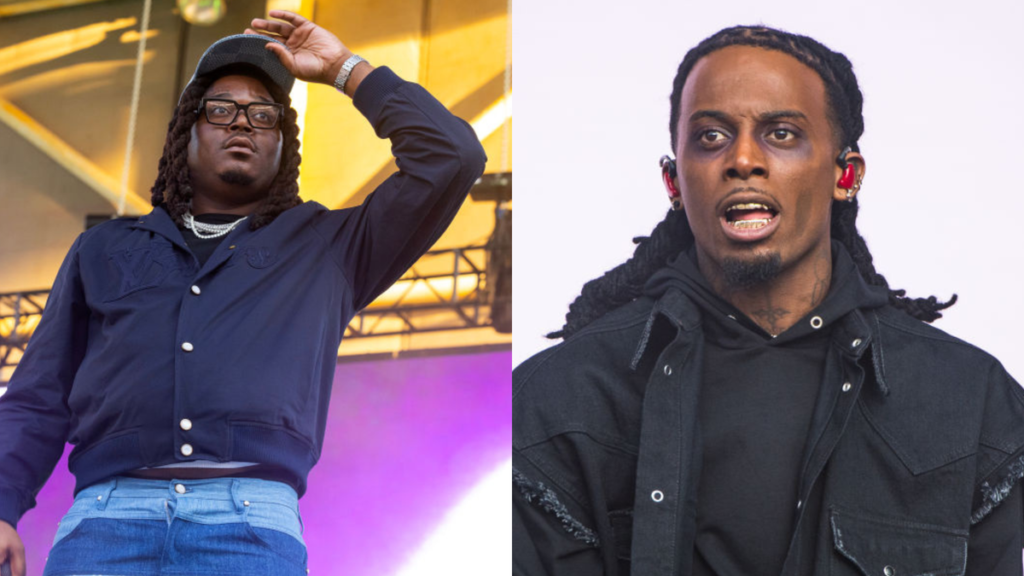
After an altercation outside ComplexCon in Los Angeles on October 3, videos of an injured Lucki spread across social media and were quickly framed as proof that his alleged tension with Playboi Carti had turned violent. But the available reporting does not establish who injured Lucki, whether a weapon caused his wound or whether Carti had any role beyond being near the disturbance.
That distinction is the real story.
According to TMZ’s unnamed law-enforcement sources, Lucki was among fans in a parking lot at approximately 4:40 p.m. when an unknown person struck the side of his face, causing a laceration. The outlet reported that a different victim was seen being stabbed and that police later located two additional injured people.
TMZ reported four victims in total, with three described as stable and one traveling to a hospital independently. The outlet also reported that no arrests had been made and that the Los Angeles Police Department was investigating the incident as an attempted murder.
However, no corresponding public LAPD statement confirming those details had been located at the time of reporting.
AllHipHop reported that one of its correspondents witnessed the alleged attack and reviewed footage showing Lucki bleeding around the side of his face or neck before being helped into a vehicle. The outlet also cautioned that the exact cause of his injury had not been established.
That leaves three different versions circulating at once.
The first is the reported account from TMZ’s law-enforcement sources: Lucki was struck, while another person was stabbed.
The second is the viral allegation: Lucki was stabbed or slashed by people connected to Carti.
The third is what the footage actually confirms: Lucki was injured, and Carti appeared near the disturbance.
Everything beyond that requires evidence that has not been made public.
Carti’s presence also needs context. ComplexCon listed him as an artistic director for its October 3–4 anniversary event, while Complex reported that he was scheduled to headline the October 4 concert at Crypto.com Arena. Seeing him near activity connected to the event was not unusual by itself.
Proximity is not participation.
Neither TMZ nor AllHipHop established that Carti attacked Lucki, ordered anyone to attack him or had associates who caused the injury. Claims tying the confrontation to Carti’s circle or Opium remain allegations.
There is some history behind the speculation, but history is not proof of motive. HotNewHipHop reported that Carti and Lucki exchanged social-media posts in September 2024 after Carti interpreted one of Lucki’s messages as a diss. Lucki reportedly maintained that Carti had misunderstood him.
That old tension gives social media a storyline. It does not identify who threw a blow in a Los Angeles parking lot two years later.
HotNewHipHop later reported that Lucki posted to his Instagram Story after the ComplexCon incident and reportedly told someone in a direct message that he was “good.” That may reassure fans, but it is not a medical assessment. His exact condition has not been publicly confirmed.
There are still more questions than answers.
Who struck Lucki? Was his laceration caused by the reported blow, or was a weapon involved? Who stabbed the other alleged victim? What started the confrontation? Were any participants actually verified as members of Carti’s circle? What role, if any, did Carti play beyond being nearby? Have police identified a suspect or made an arrest?
Until those questions are answered, presenting one theory as fact does more than generate engagement. It can damage reputations, intensify tension between fan bases and turn an unresolved incident into accepted hip-hop history.
For Lucki, the stakes include his health, safety and ability to control his own story. For Carti, the stakes include being publicly attached to an alleged attack without verified evidence of involvement. For everybody around them, reckless accusations can add real pressure to a situation that was already dangerous.
The footage proves Lucki was hurt.
It does not prove who hurt him or why.
REALITY CHECK: Viral Does Not Mean Verified
A disturbing clip creates urgency. An old disagreement provides a possible motive. A famous person standing nearby becomes the suspect.
Then repetition does the rest.
One account says “allegedly.” The next drops that word. A few reposts later, speculation becomes something “everybody knows,” even when nobody sharing it witnessed the act itself.
This does not only happen to rappers. A cropped workplace video, a neighborhood post or a screenshot from a personal dispute can build the same kind of false certainty. People see the aftermath, hear one version and fill every missing space with whatever story feels most believable.
Waiting for evidence does not mean ignoring harm. It means refusing to accuse somebody before the facts support the accusation.
Corrections rarely travel with the same energy as the original allegation. The accusation gets the dramatic clip. The correction gets a paragraph days later, after the audience has already moved on.
That is the business behind the rush: attention rewards certainty, even when the truth is still incomplete.
The headline names a feud. The real business is selling a verdict before the evidence arrives.
LET’S TALK ABOUT IT
When footage shows the aftermath but not the act, should fans and media outlets wait before naming someone—or does immediate public scrutiny help force the truth into the open?
Once an unconfirmed accusation goes viral, can a later correction repair the damage, or has the first version already won?
Drop your take below—because the way these stories spread affects more than the people in the video.