
The box score showed the struggle.
The empty gym showed the response.
Los Angeles Lakers forward Sandro Mamukelashvili finished the November 18 loss to the Utah Jazz with six points, shooting 1-for-10 from the field and missing all four of his three-point attempts, according to the NBA’s official box score.
That kind of night can follow a player home.
Mamukelashvili went somewhere else.
According to his account in a November 23 video shared by ESPN reporter Dave McMenamin, the Lakers forward went directly to the team’s practice facility and continued shooting until approximately 2:30 a.m.
And the person helping him rebound?
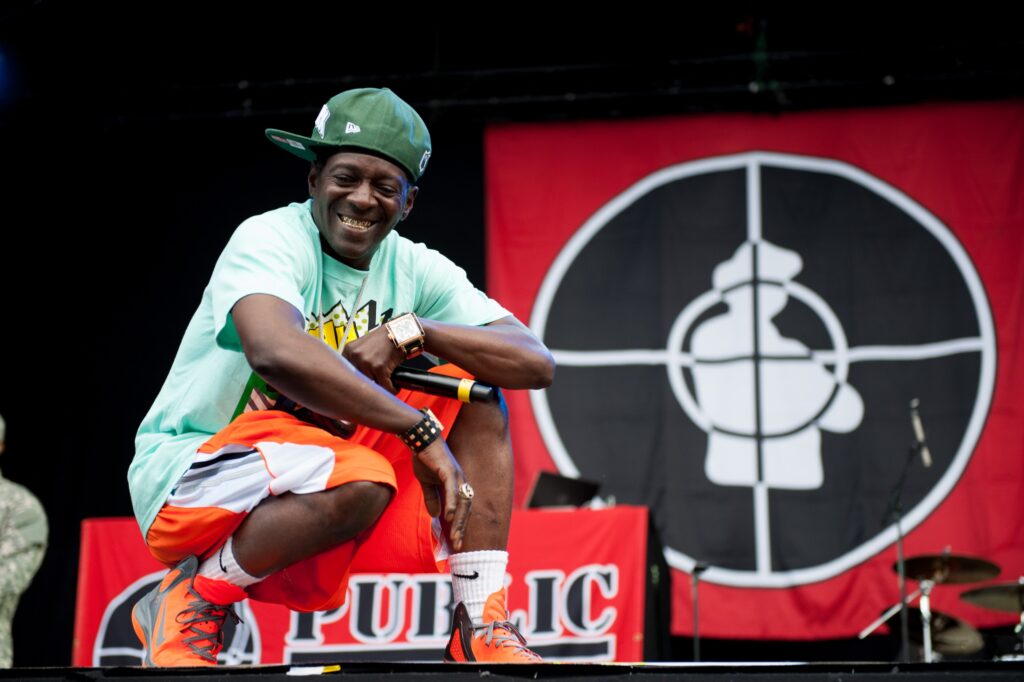
Public Enemy co-founder Flavor Flav.
That is the crossover built for social media: a Lakers player, a hip-hop legend and a late-night workout following an ugly performance. But the celebrity connection is not the most important part of the story.
The real story is what each man was willing to do once the attention shifted away from him.
Mamukelashvili told reporters that Flav accompanied him and attempted to rebound his shots during the session. According to the player, Flav became unusually quiet after recognizing how seriously he was approaching the workout.
That detail changes the tone.
Flav was not presented as a shooting coach. Mamukelashvili did not credit him with correcting his mechanics or delivering some magical speech. Based on the player’s account, Flav recognized the weight of the moment and accepted a background role while somebody else handled the difficult work.
Sometimes support looks like advice. Sometimes it looks like motivation.
Sometimes it just looks like chasing rebounds at 2 in the morning.
Mamukelashvili also said the illuminated Kobe Bryant numbers inside the facility reminded him that even accomplished players go through slumps, according to McMenamin’s video. Heavy similarly highlighted that reflection in its report about the session.
The message was not that Mamukelashvili had suddenly placed himself beside Bryant as a player. It was that struggle is not reserved for players who lack talent. Great players miss shots, lose rhythm and face stretches when confidence gets tested too.
What matters is the response.
Still, one long night in the gym did not immediately fix Mamukelashvili’s outside shot.
The NBA’s official scorer’s report shows that he made four of eight field-goal attempts against the Sacramento Kings on November 20, an improvement from his 1-for-10 performance, but he missed both of his three-point attempts.
Against Utah on November 23, the NBA’s official report records that he went 1-for-4 overall and 0-for-2 from deep. Silver Screen and Roll reported the following day that his drought had reached 16 consecutive missed three-pointers across five games.
That is an important part of the story too.
Hard work does not always produce immediate proof.
A player can return to the gym, stay late and take the situation seriously without seeing the ball fall in the next game. The work may be necessary, but it does not come with a guaranteed delivery date.
There are also details that remain unknown. Mamukelashvili did not publicly specify how many shots he took that night, how long Flav stayed or how the workout was arranged. It is also unclear whether Flav contributed beyond rebounding and encouragement.
Those unanswered questions should stay unanswered unless one of them provides more information.
What is already clear is enough: after a brutal shooting performance, Mamukelashvili chose repetition over retreat. Flavor Flav, one of hip-hop’s most recognizable personalities, helped without turning the workout into his own show.
AllHipHop’s November 24 report brought wider attention to Flav’s participation, but the moment works because attention was apparently not the point. His contribution was presence.
For Mamukelashvili, the challenge continues. He has to rebuild confidence, find consistent production and help the Lakers even when his outside shot is not falling. A shooter cannot control whether every attempt drops, but he can control whether a slump changes his preparation.
For Flav, the moment offers another picture of hip-hop influence.
Hip-hop influence is often measured through entrances, courtside seats, viral clips and celebrity access. Those things are visible. They photograph well. They keep the famous person at the center.
This was different.
Flav’s value that night, based on Mamukelashvili’s account, came from recognizing that somebody else needed the room. He could help without leading, stay involved without taking control and support the work without claiming ownership of the result.
The celebrity made the headline. The background role made the moment matter.
REALITY CHECK: The Work Nobody Applauds
One bad performance can become personal if you let it.
That does not only apply to professional athletes. A failed presentation, weak test score, missed business target or setback in a personal goal can start feeling like proof of who you are instead of evidence of what needs attention.
But a poor result is information—not an identity.
That does not mean everybody should immediately push harder without rest. Sometimes stepping away creates the clarity needed to return stronger. Other times, going back to the work while the disappointment is still fresh prevents frustration from turning into avoidance.
The right response depends on the person and the situation.
What does not change is this: confidence usually returns after action, not before it. The shots may keep missing. The numbers may not improve immediately. Nobody may notice the extra hours.
You still have to decide whether the setback gets the final word.
There is a lesson in Flav’s role too. Genuine support does not always require a speech, a solution or a spotlight. Sometimes another person needs you to stay present, handle the repetitive task and resist making their difficult moment about your contribution.
The slump gets seen. The comeback gets built in private.
LET’S TALK ABOUT IT
After a major setback, is it better to step away and reset—or return to the work immediately while the disappointment is still fresh?
When someone is struggling, does genuine support mean offering direction—or staying present without taking control of the situation?
Drop your perspective below—both choices require knowing what the moment actually needs.