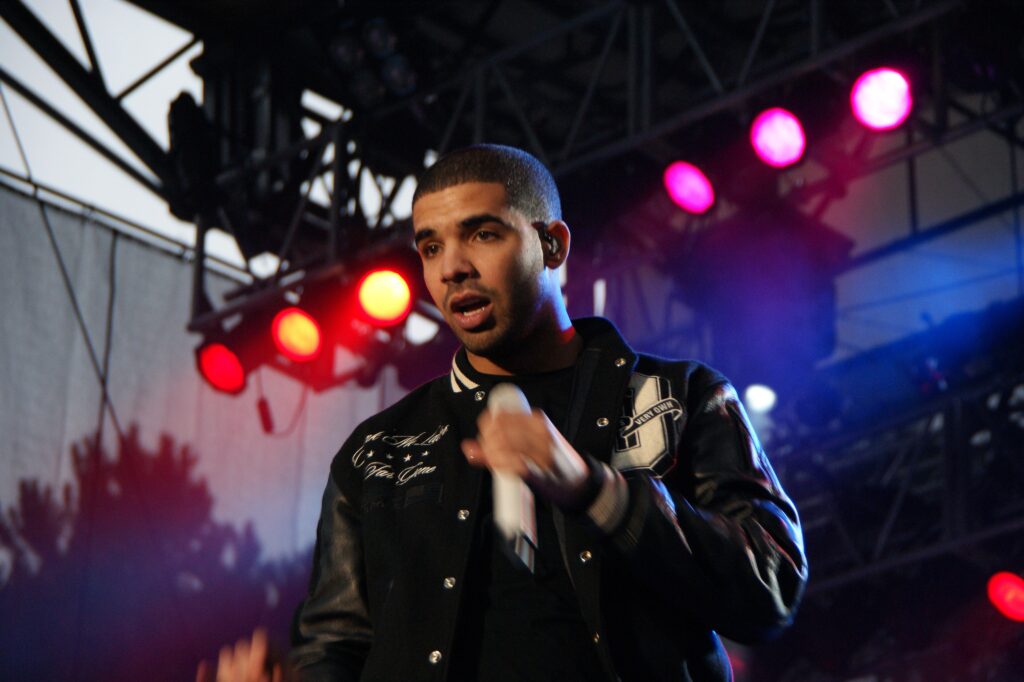
Drake has become the biggest name attached to the comeback.
That does not automatically make him the owner.
On November 24, Drake reshared a video from Brenham Saddle Shop’s official Instagram account and wrote, “We will be ready for you 2027.” According to AllHipHop and Holler, he also indicated that the exact opening date would be announced later.
That confirms a new target year for the historic Texas retailer. It does not confirm what Drake’s role in the business actually is.
Brenham Saddle Shop is not a celebrity brand created last week. According to former owner Sage Nutt in KBTX’s reporting, his great-grandfather, William Schmidt, opened the original downtown Brenham location in 1960. KBTX reported that the family-run business later moved to its Highway 290 location in 1963.
The shop closed in April 2025 after 65 years in business. At the time, however, KBTX reported that the closure was not expected to be permanent.
The first public sign of a revival arrived in June 2025, when the shop teased that its legacy would continue. Chron reported that Drake shared that announcement on his Instagram Story, immediately placing his visibility behind the comeback.
Then the timeline started moving.
In July 2026, Brenham Saddle Shop announced plans to reopen during the fall, according to KBTX and Chron. That window passed without the doors reopening. Drake’s latest message now pushes the return into 2027, but neither his post nor the shop’s announcement explained why the earlier timetable changed.
Holler reported that the revived operation plans to offer Western apparel. Beyond that, major details remain unanswered: the complete merchandise lineup, whether traditional saddle-related services will return and exactly when customers will be able to visit.
But the biggest question is still ownership.
KBTX connected the revival to trademark activity involving attorney Robert Kleinman, whose firm represented ADG Vanguard IP LLC. According to the outlet’s review of federal records, a separate Brenham Saddle Shop trademark filing was submitted through Kleinman in November 2025.
There was also an earlier filing. A USPTO-derived record shows that ADG Vanguard IP LLC filed a federal trademark application for BRENHAM SADDLE SHOP on April 10, 2025, then expressly abandoned it the following day.
Those connections help explain why Drake’s name keeps appearing in coverage of the business. They do not, by themselves, prove that he purchased the store.
That distinction counts.
No cited filing or public statement confirms that Drake owns Brenham Saddle Shop, holds an investment stake or controls its daily operations. His Instagram activity shows that he is publicly supporting the revival. It does not establish whether he is an owner, investor, licensing partner, promotional partner or simply a high-profile supporter.
Promotion, trademark activity and ownership can overlap. They are not interchangeable.
Still, Drake’s repeated posts have made him the public face of the return. When a celebrity with that level of reach tells people a business will be ready in 2027, the audience is likely to attach the promise to him—even if his legal authority behind the scenes is limited or nonexistent.
That creates real expectations.
If the reopening happens on schedule, Drake’s visibility will likely be treated as part of the rollout. If another delay occurs, his name may still absorb some of the reaction. That is the tradeoff when celebrity attention becomes one of a project’s biggest marketing assets: the public often assigns responsibility before it understands the contract.
For now, the confirmed story is straightforward. Brenham Saddle Shop plans to return in 2027, Drake is promoting that return and an exact opening date has not been announced.
Everything beyond that requires more documentation.
Who owns the operating company? Who controls the current trademark? Who owns the physical property? Who is financing the reopening? And what authority, if any, does Drake have over the business?
Until those questions are answered, calling Drake the owner would move beyond the available facts.
REALITY CHECK: Visibility Is Not Ownership
Celebrity association can make a business relationship look simple from the outside.
A famous person posts the product. Their name drives coverage. Customers begin connecting the entire venture to them. Before long, public perception turns promotion into ownership—even when the paperwork may say something completely different.
That lesson applies far beyond celebrities.
Before putting money, labor or trust into any venture, know who owns the company and its intellectual property, who controls financial decisions, what each partner is contributing and how responsibilities, compensation and exit terms are documented.
That does not mean every partnership needs its private contracts posted online. It means the people involved should understand the arrangement before the public attention, money or pressure arrives.
A recognizable name can generate momentum. It cannot replace clear ownership records, defined authority or a written agreement.
The headline is Drake’s endorsement. The real business is who owns what.
LET’S TALK ABOUT IT
When a celebrity becomes the public face of a business, should that person disclose whether they are an owner, investor or paid promoter—or is that relationship entitled to remain private?
And how much responsibility should someone carry for a venture when their visibility helped build public interest but their actual control remains unknown?
Drop your take below—because association, ownership and control are three different things.