Boosie’s White House Performance Puts the Pardon Business in the Spotlight

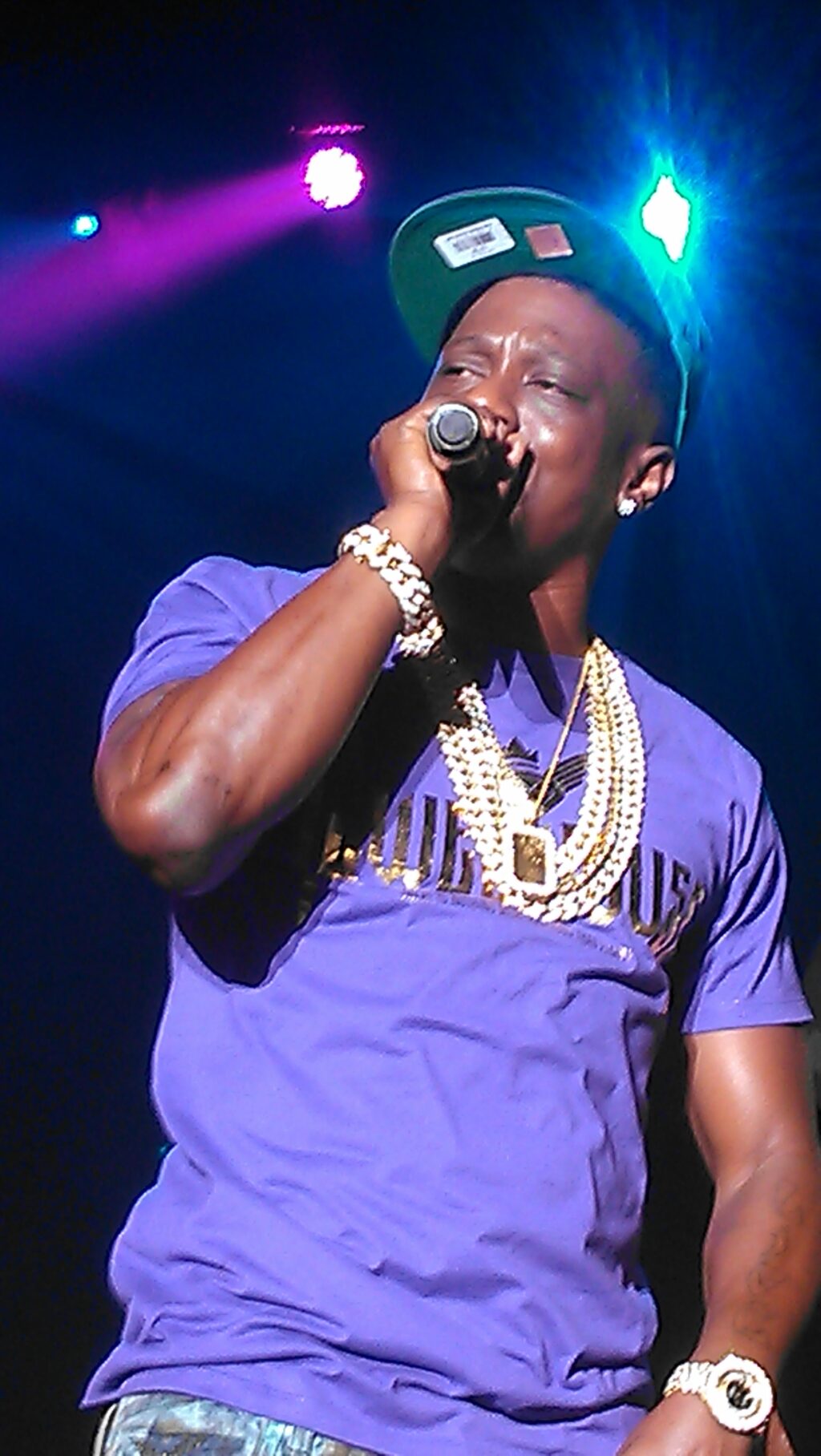
Boosie Badazz performing “Set It Off” near the White House is the kind of image built to travel.
A Louisiana rap veteran. A small crowd. One of his signature records. The most powerful political address in America sitting nearby.
But the location raises a bigger question than the performance itself.
Footage shared by The DMV Live and covered by AllHipHop showed Boosie performing outside the White House grounds on October 9. There is no confirmed report that he performed on the White House lawn, attended an official event or received an invitation from the administration.
There is also no confirmation that the appearance was a protest or direct appeal to President Donald Trump. Boosie has not publicly explained why he selected that location.
That distinction matters.
Washington.org and Ticketmaster listed Boosie as part of the Cash Money & No Limit Tour stop at Capital One Arena on October 8. His outdoor performance came the following day, but whether it was planned in advance or arranged spontaneously after the arena show remains unknown.
The visual got attention. The money behind Boosie’s unresolved pardon dispute is the larger story.
According to the U.S. Attorney’s Office for the Southern District of California, Boosie—legally named Torrence Ivy Hatch—was sentenced on January 9 to three years of supervised release, 300 hours of community service and a $50,000 fine for being a felon in possession of a firearm and ammunition.
Federal prosecutors said Boosie admitted in his plea agreement that he knowingly possessed a loaded Glock 19 in San Diego on May 6, 2023, while knowing he had a prior felony conviction.
That case helps explain why presidential clemency carries real value for him.
In a September 13 report, CBS News said Boosie claimed he paid political operatives Jack Burkman and Jacob Wohl $600,000 after being led to believe they could help secure a presidential pardon. CBS reported that Trump had not pardoned Boosie as of that date.
Boosie’s position, as presented by CBS and 60 Minutes, is that the agreement required half of his payment to be returned if the pardon did not happen. That puts the disputed refund at $300,000.
Burkman and Wohl contest that account. According to CBS, they disputed the validity of the contract and denied sending certain messages the network presented to them. Boosie is pursuing legal action over the money, but neither side’s version has been finally established through that dispute.
This is where access becomes a product.
A broker may know political figures, understand how clemency requests move or claim an ability to create pressure around a decision. What that broker cannot do is personally issue a presidential pardon. The Constitution gives that authority to the president in federal cases.
That leaves a major business question: What exactly was Boosie buying?
Was the $600,000 payment for introductions, advocacy and strategic work? Was it tied to a successful outcome? What services can Burkman and Wohl document? And if the pardon never arrived, does the reported refund provision control what happens next?
Those questions belong in the legal process, not in a social-media verdict.
Boosie says he paid for help and is entitled to money back. Burkman and Wohl dispute key parts of the agreement and communications. Until the evidence is tested, the responsible position is to separate each side’s claims from what has been conclusively established.
The financial consequences are already clear enough. Boosie says $300,000 should be returned, while his federal sentence still includes supervised-release obligations. There is also a reputational cost in being publicly connected to a high-priced effort that did not produce the desired result.
None of that proves the brokers failed to perform legitimate work. It does show why influence deals become dangerous when effort and outcome are treated like the same thing.
A person can arrange meetings and make calls. A person can write proposals and apply pressure. A person can sell proximity to power.
That person still cannot guarantee what power will decide.
Several important facts remain unanswered. Boosie has not confirmed whether the White House-area performance was connected to his clemency effort. There is no public confirmation that Trump or anyone in his administration knew it was happening. It is also unclear whether Boosie is still actively seeking a pardon while pursuing the disputed refund.
For now, the performance and the pardon fight should remain separate unless evidence connects them.
The performance made the headline. The pardon business is the real story.
REALITY CHECK: Access Is Not Control
Here is the lesson beyond Boosie’s situation.
When somebody sells access to a president, executive, investor, employer or anyone else holding the final authority, the buyer needs to know whether the payment covers work performed or a result delivered.
Those are different deals.
Before serious money changes hands, the agreement should define the services, deadlines, refund conditions and evidence required to show that the work was completed. Contracts, invoices and communications need to be preserved because confidence and connections are difficult to prove after a deal falls apart.
That does not mean every unsuccessful broker acted improperly. Some professionals do real work without controlling the final answer. It means both sides should decide in advance who carries the financial risk when a third party says no.
The pitch may open the door.
The paperwork decides who pays when the door stays closed.
LET’S TALK ABOUT IT
Should someone selling high-level access be paid for making a legitimate effort—or only when the promised result actually happens?
When a deal depends on a decision neither party controls, should the buyer carry the risk, the broker carry it or should both sides share it?
Drop your take below—because access has value, but control is something else entirely.