Anthony Anderson Leads Soul Train Awards Into Its Biggest Broadcast Yet

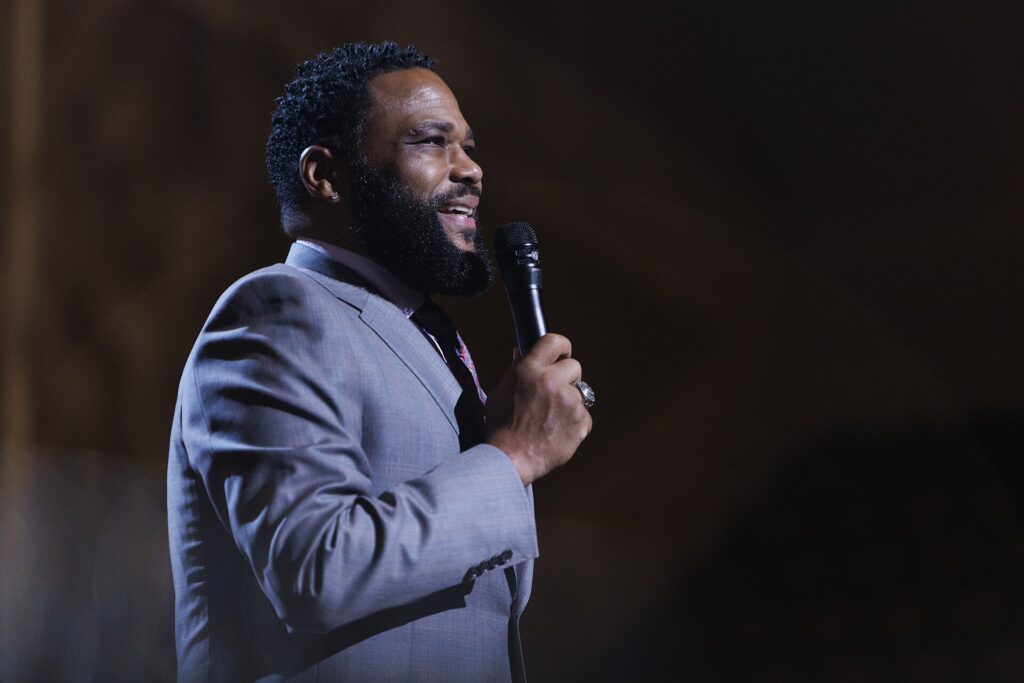
Anthony Anderson has hosted major awards shows before.
But this time, the stage carries more than trophies, performances and television moments. It carries the weight of a Black music institution trying to reach a wider audience without losing the identity that made it matter.
BET announced October 1 that Anderson will host the 2026 Soul Train Awards. The ceremony is scheduled to air November 27 at 8 p.m. ET/PT on BET and CBS, marking the awards show’s first simulcast on the broadcast network.
That CBS debut is the bigger story.
According to BET’s September 3 announcement, the show will also air on BET Her, VH1, MTV2 and Logo. That gives the Soul Train Awards access to viewers beyond its traditional cable footprint while bringing the franchise back to Chicago, the city where Don Cornelius created the original Soul Train television program.
Anderson understands that history.
In BET’s host announcement, he expressed excitement about leading the show in Chicago and credited Cornelius with building a platform that elevated Black artists. Anderson is also familiar with the responsibility that comes with controlling the room. BET noted that he hosted the BET Awards in 2015 and 2016, along with eight consecutive editions of the NAACP Image Awards.
That experience should matter on a night designed to connect different audiences.
Hosting an awards show is not simply about reading jokes from a teleprompter. The host sets the pace, handles transitions, responds when live television gets unpredictable and helps determine whether the ceremony feels like a genuine cultural event or another corporate production wearing the culture’s clothes.
Anderson will be guiding that balance on the franchise’s widest television platform yet.
BET describes the 2026 ceremony as a celebration of R&B, soul and the larger Soul Train legacy. Spotify and Toyota are presenting the show, while Spotify said it will serve as the exclusive music-streaming partner. BET also identified Jesse Collins Entertainment as the production company behind the ceremony.
Those partnerships show the business potential surrounding the return. But the value of the Soul Train name was not created by sponsors, streaming platforms or network expansion.
It was created by decades of trust.
Don Cornelius built a television platform where Black music, fashion, dance and personality could be presented as the main event—not as a side category waiting for approval from the broader entertainment industry. BET’s official history also recognizes that the original program featured hip-hop artists alongside its foundation in soul and R&B.
That connection gives hip-hop audiences a reason to watch what happens next.
No 2026 hip-hop performers, presenters, nominees or special honorees have been announced. That distinction matters because the Soul Train Awards should not be described as a hip-hop ceremony simply because hip-hop belongs within its history.
The real question is how much space the current culture will receive when the lineup is revealed.
Will the show represent artists shaping hip-hop now? Will younger acts appear as full participants in the legacy, or will hip-hop mainly function as familiar branding between R&B performances? Will the CBS audience see a living Black music institution, or a polished tribute to what that institution used to be?
Those answers are still coming.
BET has not announced the nominees or special honorees. The network has also not publicly detailed where and when the ceremony will be recorded in Chicago or whether the CBS debut will bring major changes to the format.
That uncertainty makes Anderson’s role more interesting. He is not just hosting another edition of an established awards show. He is becoming one of the public faces of its expansion.
For BET, the opportunity is obvious: place a culturally specific franchise in front of more viewers. For CBS, the simulcast adds a recognizable Black entertainment brand with decades of history. For the Soul Train Awards, the challenge is making that increased visibility feel like growth instead of dilution.
A bigger audience can create more sponsorship value, more social conversation and more opportunities for artists. It can also create pressure to smooth out the cultural details that made the franchise distinct.
The strongest version of this show will not treat those goals as opposites. It will welcome new viewers while remaining clear about whose legacy built the room.
REALITY CHECK: Build the Identity Before Chasing the Platform
There is a practical lesson underneath this broadcast expansion.
People often chase a bigger platform before establishing what they want that platform to amplify. More followers, more exposure and more access sound valuable, but attention alone does not give a person, business or creative brand a clear identity.
Soul Train enters this bigger television environment with something most new brands cannot purchase: recognition built through consistency.
That does not guarantee the 2026 ceremony will succeed. It does explain why the opportunity exists.
The same principle applies outside entertainment. Define your value, serve the people who already trust you and build something recognizable before treating expansion as the goal.
A larger platform can strengthen what is already there. It can also expose when nothing solid was built underneath it.
The headline is the bigger stage. The real business is having an identity worth amplifying.
LET’S TALK ABOUT IT
Can the Soul Train Awards reach a broader CBS audience without losing the cultural identity that made the franchise important?
Which current hip-hop artists should be represented when the performers, nominees and honorees are announced?
Drop your perspective below—because expansion only matters if the culture still recognizes itself on the screen.