Ashanti Turns Reality TV Into a Master Class on Ownership

Making the hit and owning the hit are two different accomplishments.
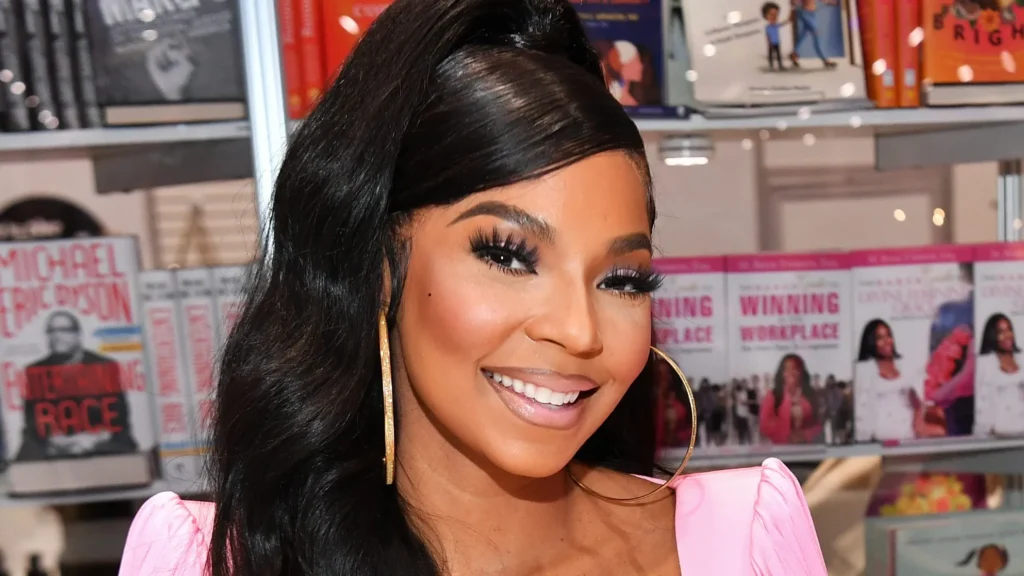
Ashanti already proved she could create music with staying power. Now, cameras are documenting her attempt to turn that history into an asset she controls.
According to AllHipHop, Peacock announced on October 15 that Nelly and Ashanti: We Belong Together will return for its second season on November 19, 2026. BroadwayWorld, citing Peacock’s official synopsis, reported that all eight episodes are scheduled to premiere together.
The series follows Nelly and Ashanti as they manage music, family, touring and life in the public eye. Season 1 debuted in June 2025, according to the Associated Press, and Peacock renewed the show in March 2026, as AllHipHop previously reported.
This time, however, Ashanti’s catalog is becoming part of the story.
Peacock’s synopsis says Season 2 will document Ashanti re-recording her self-titled 2002 debut album while creating new music, performing, raising her family and dividing her time between New York and St. Louis.
That sounds like a reality television storyline.
It is really an ownership storyline.
Ashanti publicly discussed plans to re-record her debut album during a September 2021 appearance on The Tamron Hall Show, according to AllHipHop. In a September 2026 interview with Rolling Stone AU/NZ, she confirmed that she was actively recording masters she would own and emphasized why artists need to understand ownership.
The distinction matters.
A song and its master recording are connected, but they are not the same asset. A master is a specific recorded version of a song—the version that can be streamed, licensed, distributed or placed in visual media under the terms governing that recording.
By re-recording the album, Ashanti can create new versions that generate new master recordings under her control. That would give her a fresh catalog asset with potential value across streaming, licensing, synchronization and future distribution opportunities.
But it would not automatically transfer ownership of the original 2002 masters to her.
That detail keeps the story accurate. Re-recording can create an alternative to an older recording, but it does not erase the original, rewrite old contracts or settle every question surrounding the first version.
It creates another option.
For an established artist, that option can carry weight because the audience already knows the songs. The challenge is getting listeners, platforms and potential licensing partners to embrace the new recordings when familiar versions are already available.
That is where music, memory and business collide.
Fans may feel attached to the exact vocals, production and emotion captured on the original album. Ashanti, meanwhile, has an opportunity to revisit those records with years of experience and create versions whose long-term use may benefit her more directly.
Season 2 could make that complicated process understandable without turning it into a contract lecture. Viewers will see the studio work, but the bigger story is what the work represents: an artist attempting to build ownership around music that helped establish her career.
Nelly’s storyline adds another side of the same conversation.
According to Peacock’s synopsis published by BroadwayWorld, he will reflect on the physical effects of years spent touring. His story is not the main ownership angle, but it points toward another business reality artists eventually face.
The music industry can earn money from a recording for decades. The performer still has to step onstage, travel and absorb the physical cost of keeping a touring operation moving.
One storyline is about controlling the work. The other is about what the work demands from the person who created it.
Nelly and Ashanti are also executive producers of the series, according to Peacock information published by BroadwayWorld. That does not tell viewers every editorial decision they control, but it does mean they are not simply appearing in somebody else’s production without a formal role behind the scenes.
Several important questions remain unanswered.
Neither Ashanti nor Peacock has announced when the re-recorded album will be released, how many songs have been completed, what title it will use or how it will be distributed. The available reporting also does not establish which collaborators will appear on her new music or what specific ownership, licensing and financial terms will govern the new masters.
Peacock has not detailed which tours or physical concerns will be covered through Nelly’s storyline either.
Those unknowns are not side notes. They will determine whether the season merely documents an interesting studio project or captures a meaningful shift in how Ashanti’s catalog can be used going forward.
REALITY CHECK: Making It Is Not Owning It
You do not have to record an album to understand this lesson.
A person can build a product without controlling its distribution. They can grow an audience on a platform they do not own. They can create a design, business or body of work while a contract determines who receives the long-term value.
That does not mean every partnership is unfair or that creators should reject every deal. Sometimes outside investment, distribution and infrastructure help the work reach people it could never reach alone.
But immediate exposure and lasting control are not interchangeable.
Ownership terms matter. Documentation matters. Contracts matter. The decisions made before the success arrives can determine who benefits after the attention moves somewhere else.
Ashanti’s re-recording project cannot automatically give her the original masters. It can give her something else: new recordings positioned for a future she has more power to shape.
The old songs built the legacy. The new masters could change the business.
LET’S TALK ABOUT IT
If an artist does not control the original recordings, is re-recording the smartest way to reclaim their future value—or does introducing another version risk dividing the audience?
Would Ashanti’s ownership journey make you examine who controls the work, audience or business assets you are building?
Drop your perspective below—because ownership rarely becomes important only after the money arrives.